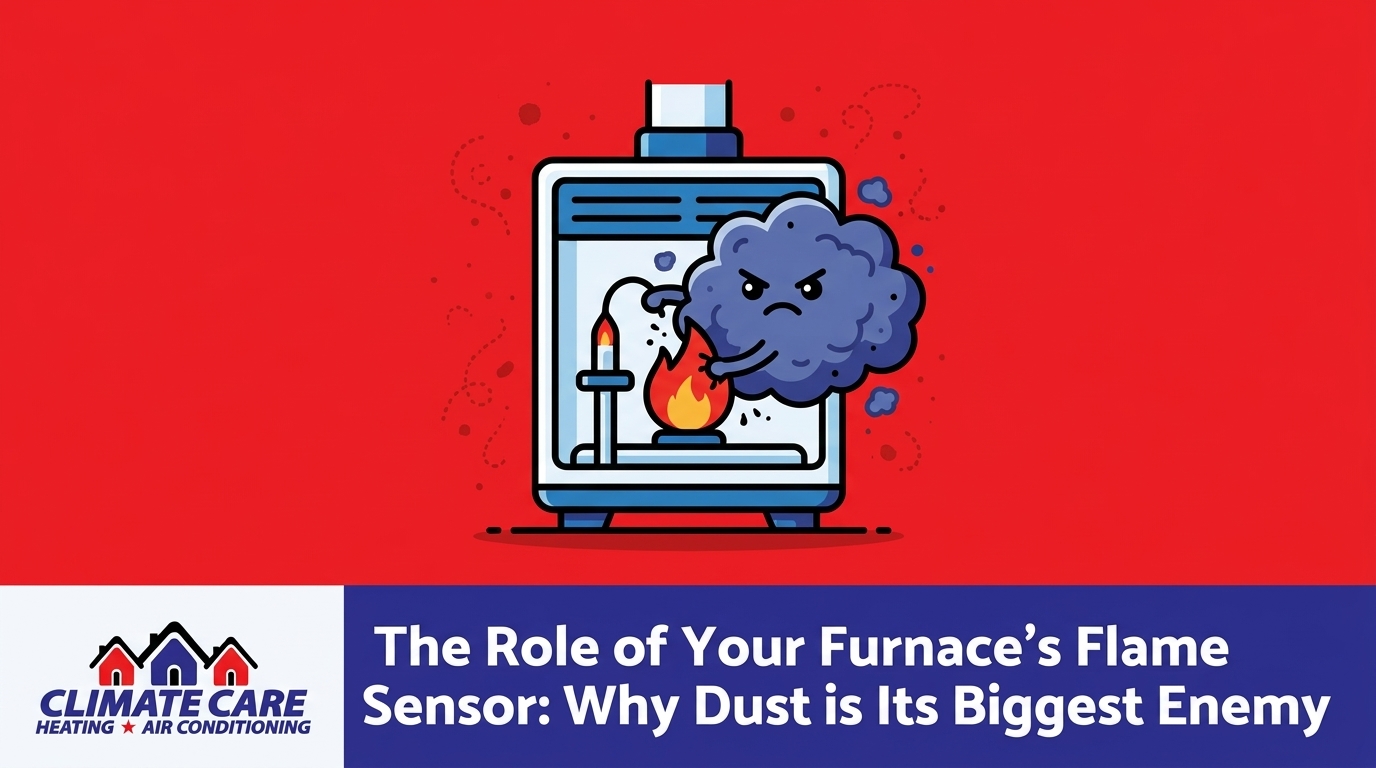
The Role of Your Furnace's Flame Sensor and Why Dust is Its Biggest Enemy
If your furnace immediately shuts down on the first chilly fall night, a dirty flame sensor is likely to blame. See why summer dust triggers this built-in safety feature.
If you've ever wondered what ac making strange noises what they mean, here's a quick answer before we dive deeper:
• Banging / Clanking — Most Likely Cause: Loose or broken part inside compressor or fan — Urgency: High — turn off now
• Screeching / Squealing — Most Likely Cause: High compressor pressure or worn motor bearings — Urgency: High — turn off now
• Hissing — Most Likely Cause: Refrigerant leak or duct air leak — Urgency: High — turn off now
• Buzzing — Most Likely Cause: Electrical issue, frozen coils, or failing fan motor — Urgency: High — call soon
• Rattling — Most Likely Cause: Loose panels, debris, or loose fan blade — Urgency: Medium — inspect soon
• Clicking (repeated) — Most Likely Cause: Faulty thermostat, relay, or debris in fan — Urgency: Medium — schedule service
• Whistling — Most Likely Cause: Clogged air filter or blocked vents — Urgency: Low — check filter first
• Gurgling / Bubbling — Most Likely Cause: Condensate drain issue or refrigerant flow — Urgency: Low-Medium — monitor
• Soft hum + air whoosh — Most Likely Cause: Normal operation — Urgency: Normal — no action needed
Your air conditioner isn't supposed to be silent — but it should sound predictable. Modern AC systems typically run between 25 and 55 decibels, roughly the level of a quiet conversation. When new or worsening sounds start showing up, that's your system flagging a problem before it becomes a breakdown.
Here in the Central Valley, that matters a lot. Manteca summers regularly push past 100°F, and an AC unit that's struggling — or worse, failing — during a heat wave is more than an inconvenience. Catching a strange noise early is often the difference between a simple repair and a full system replacement.
The good news? Most AC noises point to a specific cause, and knowing what you're hearing puts you way ahead of the problem.
To understand what your air conditioner is trying to tell you, it helps to know where the sound is coming from. Your system is split into two main sections: the indoor unit (the air handler) and the outdoor unit (the condenser). Inside these units, components like the compressor, fan motor, refrigerant lines, and electrical connections all work in harmony.
When one of these parts begins to wear down or fails completely, the harmony is replaced by a jarring, unfamiliar noise.
To help you quickly distinguish between normal and abnormal noises, we've put together a handy comparison table:
• Humming — Normal Operation: A steady, quiet background hum from the outdoor unit. — Abnormal (Needs Inspection): Loud, vibrating buzz that shakes the walls or floor.
• Clicking — Normal Operation: A single click when the system starts or stops. — Abnormal (Needs Inspection): Continuous rapid clicking or chattering throughout the cycle.
• Airflow — Normal Operation: A soft whoosh of air moving through the vents. — Abnormal (Needs Inspection): Whistling, rattling vents, or a loud flapping sound.
• Dripping — Normal Operation: Soft dripping sound inside the drain line. — Abnormal (Needs Inspection): Loud gurgling, bubbling, or water splashing inside the house.
Some sounds are polite requests for maintenance, while others are full-blown emergencies. If you hear any of the following noises, you should turn off your system at the thermostat immediately and call for professional service.
• Screeching or Squealing: If this high-pitched sound comes from your outdoor unit, it often indicates dangerously high internal pressure within the compressor. While modern systems have built-in safety shut-offs, running a system in this state is incredibly dangerous. If the squeal comes from an older indoor unit, it may be a slipping fan belt or dry motor bearings.
• Banging or Clanking: This is a classic sign of a loose or broken part inside the compressor or fan assembly. A piston pin, connecting rod, or fan blade may have come loose and is now thrashing around inside the housing. Ignoring this can turn a simple part replacement into a catastrophic system failure.
• Hissing: A loud, persistent hissing sound usually points to a refrigerant leak. Because refrigerant is under high pressure, it makes a hissing noise as it escapes through tiny cracks in the copper lines. Refrigerant leaks are health hazards that can cause headaches, nausea, or respiratory issues, and they require EPA-certified technicians to safely diagnose and repair.
• Buzzing: A loud buzzing or sizzling sound often indicates electrical arcing. This happens when loose wiring, a failing contactor, or a bad relay allows electricity to jump across connections, presenting a serious fire hazard. Buzzing can also occur when your system is struggling under extreme strain, which often correlates with the AC Circuit Breaker Keeps Tripping.
If you notice these sounds alongside other Signs of Failing AC System, do not wait for the system to shut down on its own. Turn it off immediately to protect your home and your wallet.
Pinpointing whether the sound originates inside or outside is half the battle when diagnosing an HVAC issue.
The indoor unit houses the evaporator coil, blower motor, and condensate drain system.
• Repeated Clicking: A persistent clicking from the indoor unit usually points to a failing relay, a faulty thermostat, or something physically blocking the blower fan.
• Gurgling or Bubbling: This sound typically traces back to the condensate drain line. If the line is partially clogged, air bubbles can gurgle through the trapped water. It can also point to a refrigerant line that has lost pressure, which is a common reason Why Your AC Unit Freezes Up and leaves you with an AC Not Cooling.
The outdoor unit houses the compressor, condenser fan, and electrical control box.
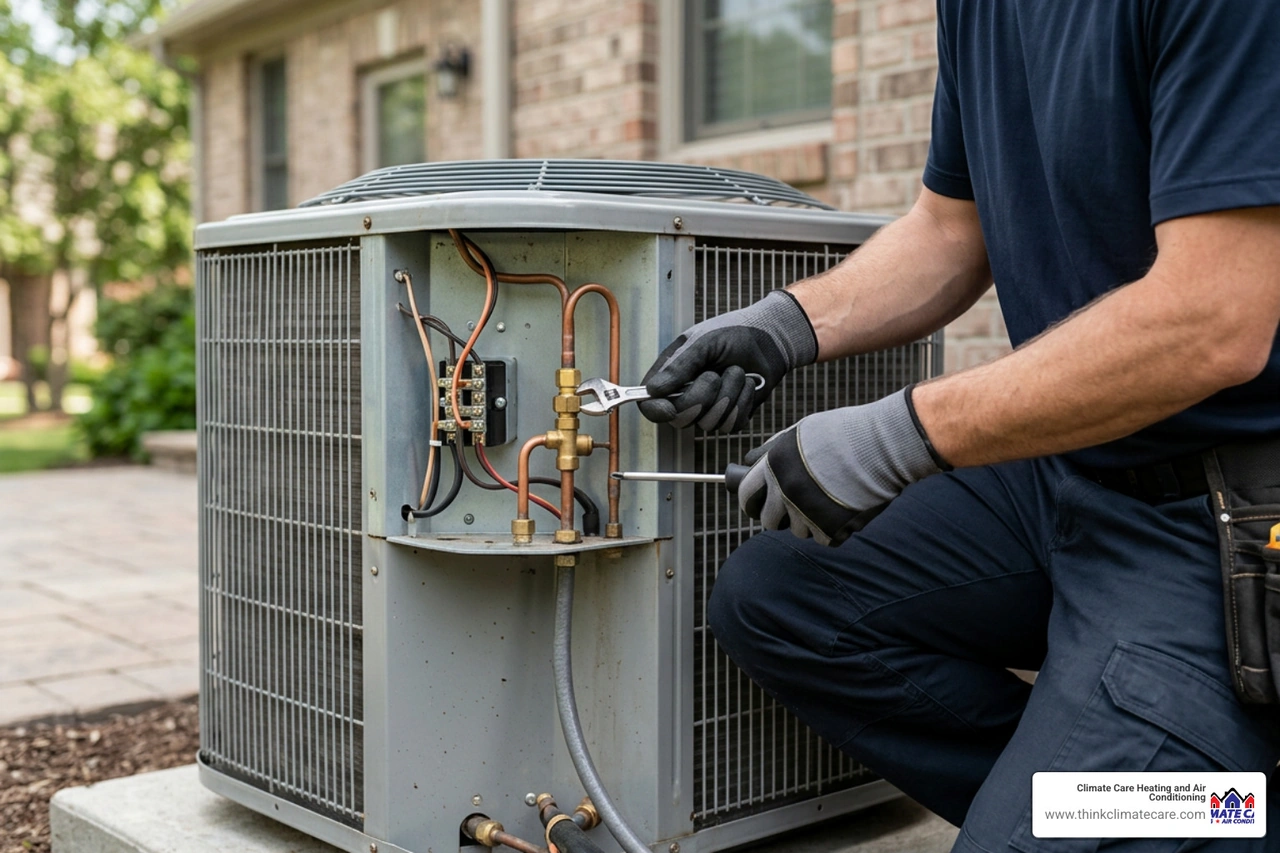
• Rattling: A rattling sound is often caused by twigs, leaves, or debris falling through the top grate into the fan blades. It can also be a sign of loose casing panels vibrating against each other.
• Grinding: A harsh grinding noise almost always points to mechanical wear, specifically worn-out bearings inside the condenser fan motor.
It is important to remember that your air conditioner will never be completely silent. Understanding what is normal can save you from unnecessary worry.
• Normal Sounds: A gentle, steady hum from the outdoor fan, a soft whoosh of air through the supply registers, and a single, distinct click when the thermostat relay tells the system to turn on or off are all perfectly normal. You might also hear a brief snapping or popping sound from your walls; this is just the plastic housing or ductwork expanding and contracting as temperature changes.
• Signs of Trouble: If that single click turns into constant, rapid clicking, or if the gentle hum turns into an abnormal clunking, your system is struggling. When these sounds are ignored, they quickly lead to performance drops, explaining Why AC Is Not Cooling Properly and driving up your monthly energy bills.
While some mechanical issues require professional expertise, there are several steps you can take to keep your air conditioner running quietly and efficiently.
Before calling in the pros, there are a few safe, simple checks you can perform yourself:
1. Check the Air Filter: A heavily clogged air filter restricts airflow, forcing the blower motor to work twice as hard. This restriction often creates a high-pitched whistling or whining sound. Replacing your filter every 60 to 90 days is the easiest way to prevent this.
2. Clear Outdoor Debris: Turn off the power to your system and inspect the outdoor condenser. Remove any leaves, twigs, or weeds. Maintain a clear two-foot zone around the unit to ensure proper airflow and prevent debris from getting caught in the fan.
3. Tighten Loose Screws: If you hear a persistent rattle, check the outer metal panels of your outdoor unit. Over time, system vibrations can loosen the screws. Gently tightening them with a screwdriver can instantly quiet the rattle.
4. Inspect Your Vents: Ensure all supply and return grilles are open and unobstructed by furniture or curtains. Blocked vents cause pressure imbalances that result in whistling or rushing-air noises, which can escalate to the AC Blowing Hot Air.
The absolute best way to keep your air conditioner operating quietly is through regular, preventive maintenance. During a professional tune-up, a technician will perform several key tasks that prevent noises from developing in the first place:
• Lubricating Bearings: Ensuring the blower and condenser fan motors are well-lubricated prevents dry-bearing friction, eliminating screeching and grinding.
• Tightening Electrical Connections: Securing loose wiring and contacts prevents electrical buzzing and arcing.
• Coil Cleaning: Cleaning dirty evaporator and condenser coils prevents the airflow restrictions and ice buildup that cause buzzing and whistling.
• Refrigerant Pressure Tests: Checking refrigerant levels ensures there are no leaks and that the system is operating under safe, normal pressures.
Scheduling a spring tune-up not only keeps your home quiet but also maximizes energy efficiency and extends the overall lifespan of your equipment. It can also prevent other frustrating system issues, such as those discussed in our guide on Strange AC Smells and Solutions.
If you’ve completed basic troubleshooting and your air conditioner is still making unusual sounds, it is time to call in the experts. Running a damaged system can turn a minor, inexpensive repair into a major headache.
At Climate Care Heating and Air Conditioning, we provide holistic HVAC care to homeowners throughout Manteca, Stockton, Modesto, and the surrounding Sacramento areas. We focus on maximizing performance, optimizing cost-efficiency, and adhering to strict environmental standards.
To help you decide when to call us, check out these helpful resources:
• 10 Indicators You Need Professional AC Repair
• AC Repair Stockton CA Complete Guide
• AC Repair Manteca Ultimate Guide
Whether you need emergency 24/7 service to restore your cooling during a scorching Central Valley summer or want to save money with our comprehensive membership plan, we are here to help.
Don't let a strange noise disrupt your home's peace and comfort. Schedule professional AC repair with Climate Care today, and we'll bring the sound of silence back to your home!
Our customers love our service and support.

Had Climate Care inspect our HVAC before summer. Christopher Hayes was polite, knowledgeable, and efficient. Great service from the office team—highly recommend!
Alex Corona did a thorough furnace check-up today, showing before-and-after photos and answering all my questions. I’m happy with his work and highly recommend him. Great job—happy customer!
Alan C. serviced my furnace today and gave me a courtesy call before arriving. He was very professional, provided great service, and shared lots of pictures. Definitely a five-star experience—I’ll use them again!
On 02/19/2025, Alan inspected my furnace and did a great job explaining everything. He was professional, hardworking, and focused on customer satisfaction. Highly recommend requesting him!