Why Knowing How to Prevent HVAC Emergencies with Maintenance Could Save Your Home This Season
Knowing how to prevent HVAC emergencies with maintenance is one of the most practical things you can do as a homeowner — especially in the Central Valley, where summer temperatures routinely push past 100°F and a broken AC is more than just an inconvenience.
Here's a quick answer if you're short on time:
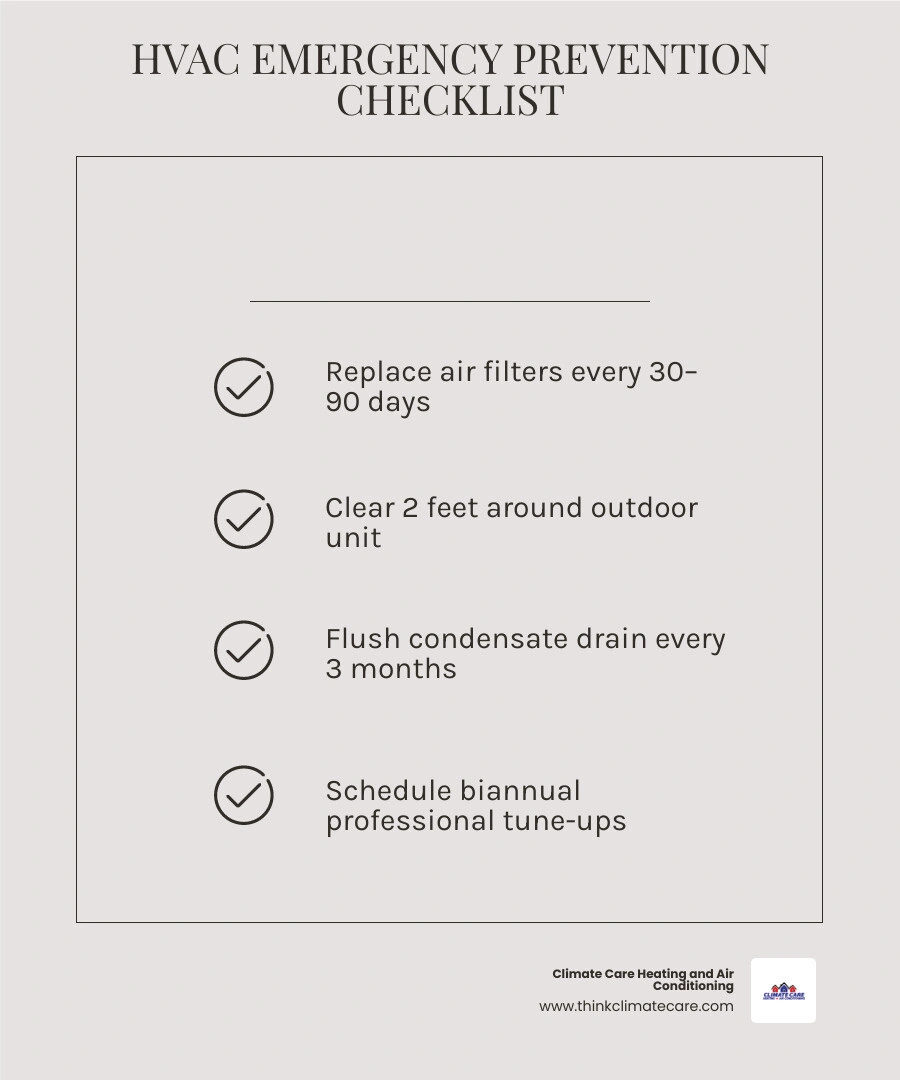
1. Replace air filters every 30–90 days (more often with pets or allergies)
2. Schedule professional tune-ups twice a year — spring for cooling, fall for heating
3. Keep the outdoor unit clear with at least 2 feet of space on all sides
4. Flush the condensate drain line every 3 months to prevent clogs and water damage
5. Watch for warning signs like unusual noises, odd smells, short cycling, or uneven temperatures
6. Install a smart thermostat to catch efficiency drops before they become breakdowns
Most HVAC failures don't happen out of nowhere. Research consistently shows that dirt, neglect, and skipped inspections are the leading causes of system breakdowns — and that regular maintenance can cut the risk of a costly failure by as much as 95%. Yet many homeowners in Manteca, Modesto, Stockton, and Sacramento only think about their HVAC system when something goes wrong.
That's a costly habit. A system that misses routine care doesn't just break down more often — it works harder, uses more energy, and wears out years ahead of schedule. The good news is that a straightforward, consistent maintenance routine puts you firmly in control.
How to Prevent HVAC Emergencies with Maintenance
When we talk about how to prevent HVAC emergencies with maintenance, we are essentially talking about removing the "silent killers" of mechanical systems: dirt, friction, and neglect. In our experience serving homes from Lodi to Turlock, we have found that nearly half of all service calls could have been avoided with a simple check-and-balance approach.

The most common failure causes are often the most preventable. For instance, a dirty air filter restricts airflow, which forces the blower motor to work twice as hard, eventually leading to electrical component wear or a total motor burnout. Similarly, small refrigerant leaks, if left unaddressed, can cause your compressor—the most expensive part of your system—to overheat and fail permanently.
To help you stay ahead of these issues, we’ve broken down the essential tasks into two categories: what you can do yourself and what requires our professional touch.
• Air Filter Replacement — Frequency: Every 30–90 Days — DIY or Professional?: DIY
• Outdoor Unit Debris Clearance — Frequency: Monthly — DIY or Professional?: DIY
• Condensate Drain Flush — Frequency: Every 3 Months — DIY or Professional?: DIY
• Electrical Connection Tightening — Frequency: Biannually — DIY or Professional?: Professional
• Refrigerant Level Verification — Frequency: Biannually — DIY or Professional?: Professional
• Safety Control Testing — Frequency: Biannually — DIY or Professional?: Professional
Essential DIY Steps for Homeowners in Stockton and Modesto
You don't need a tool belt to be the first line of defense for your home's comfort. The most critical task is filter replacement. In the dusty Central Valley, especially during the dry summer months in Stockton or Modesto, filters can clog faster than you’d think. We recommend checking them every 30 days. What happens when you don't change your HVAC air filters is a cascade of problems: reduced efficiency, frozen evaporator coils, and poor indoor air quality.
Next, take a walk outside. Your outdoor condenser unit needs to "breathe" to release heat. Ensure there is at least a 2-foot clearance around the unit, free of tall grass, weeds, or stored items. If the fins are clogged with dirt or cottonwood seeds, a gentle rinse with a garden hose (never a pressure washer!) can work wonders.
Finally, don't forget the "vinegar treatment." Pouring a cup of distilled white vinegar down your condensate drain line every few months prevents algae and sludge from clogging the pipe. This simple habit prevents one of the most common HVAC emergencies: water backing up and damaging your drywall or flooring.
Why Professional Tune-Ups are Key to How to Prevent HVAC Emergencies with Maintenance
While DIY habits are vital, some components require a trained eye and specialized tools. This is why professional tune-ups are non-negotiable. We recommend a biannual schedule: a spring cooling prep for your AC and a fall heating inspection for your furnace.
During a HVAC maintenance Stockton CA guide visit, our technicians perform deep-level tasks that prevent sudden failures. We tighten loose electrical connections that could cause a fire or a short circuit. We clean the internal coils to ensure maximum heat transfer, which can reduce your energy consumption by 10-20%. We also test the "amp draw" of your motors; if a motor is pulling too much power, it’s a sign it’s struggling and likely to fail soon. Catching this in April is much better than dealing with a dead AC in July.
Recognizing Warning Signs Before a Total System Failure
Your HVAC system usually tries to tell you it's struggling before it finally gives up. Learning to listen to these cues is a huge part of how to prevent HVAC emergencies with maintenance.
• Unusual Noises: Banging, screeching, or grinding sounds often indicate a loose belt or a motor bearing on its last legs.
• Odd Smells: A burning odor could mean electrical components are overheating, while a musty scent often points to mold in the ductwork or a blocked drain.
• Short Cycling: If your system turns on and off every few minutes without reaching the set temperature, it’s under extreme stress.
• Uneven Temperatures: If the bedroom is a sauna while the living room is an icebox, you likely have airflow or ductwork issues.
If you notice any of these warning signs of HVAC system failure, it’s time to call us before a minor repair turns into a major replacement.
Conclusion: Protecting Your Central Valley Home
At Climate Care Heating and Air Conditioning, we believe in holistic HVAC care. We aren't just here to swap parts; we want to ensure your system runs at peak efficiency, saves you money on utility bills, and lasts as long as possible. By following this HVAC preventative maintenance Sacramento guide, you can extend your equipment's lifespan from the average 10 years to 15 years or more.
If you’re currently facing an issue, don’t wait for it to get worse. You can Schedule Emergency HVAC Service in Stockton CA and have one of our expert technicians restore your comfort quickly and safely.
Maximizing Efficiency with Smart Technology and Maintenance Plans
In May 2026, we have more tools than ever to keep your home running smoothly. Smart thermostats are now the "digital safety net" for your home. Many modern units use AI diagnostics to monitor run times; if they notice the system is running 20% longer than usual to reach the same temperature, they can alert you to a developing efficiency drop before you even feel the difference.
To make things even easier, our HVAC maintenance Tracy CA service includes comprehensive membership plans. These service contracts take the guesswork out of maintenance. We’ll call you when it’s time for your tune-up, and you’ll enjoy priority scheduling and significant savings on any necessary repairs. It’s the ultimate way to ensure cost-efficiency and peace of mind year-round.
Seasonal Preparation for the Central Valley Climate
Our local climate in Manteca, Modesto, and Sacramento presents unique challenges. We face intense summer heatwaves that put massive pressure on AC units and winter freezes that demand a reliable furnace.
Preventing AC breakdowns during summer starts in the spring. For those with heat pumps, maintenance is even more critical because the system works year-round. In the fall, our focus shifts to furnace safety, ensuring that your heating system is ready to handle the cold without skyrocketing your energy bills. Whether you are in Galt, Elk Grove, or Ripon, seasonal prep ensures your system is never caught off guard by a sudden shift in the weather.
How to Prevent HVAC Emergencies with Maintenance and Protect Your Home
Maintenance is about more than just comfort—it’s about safety and property protection. A neglected furnace can pose a hidden heating threat, such as a cracked heat exchanger that leaks odorless, colorless carbon monoxide. Regular inspections ensure your safety sensors are functional and your home is secure.
Furthermore, preventing water damage from clogged drains and ensuring high indoor air quality protects both your home’s structure and your family's health. By committing to a regular maintenance routine, you aren't just "fixing" a machine—you are investing in long-term comfort and drastically reducing your breakdown risk. Let us help you keep your Central Valley home the sanctuary it should be.