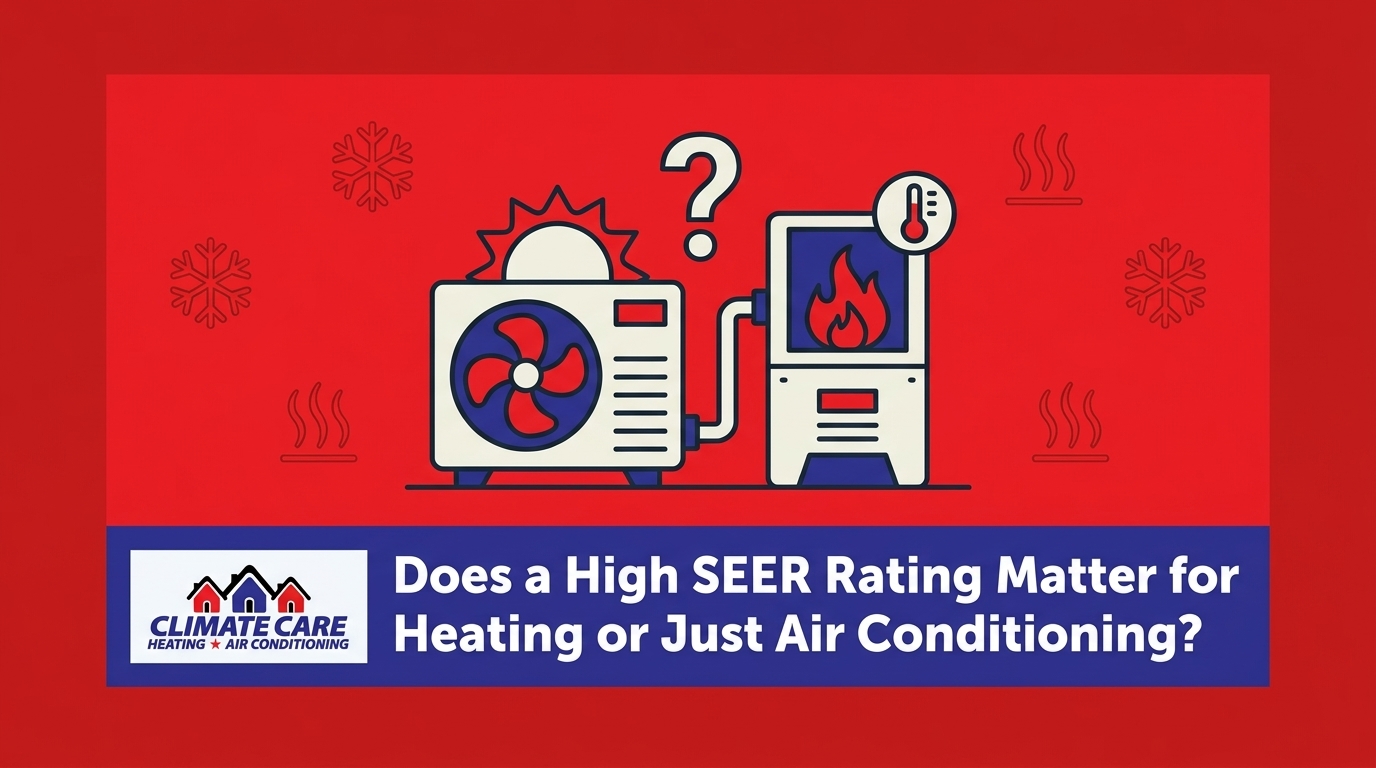
Does a High SEER Rating Matter for Heating or Just Air Conditioning?
That high SEER rating on your outdoor unit only measures summer cooling efficiency. Discover which HVAC ratings actually impact your winter heating performance.
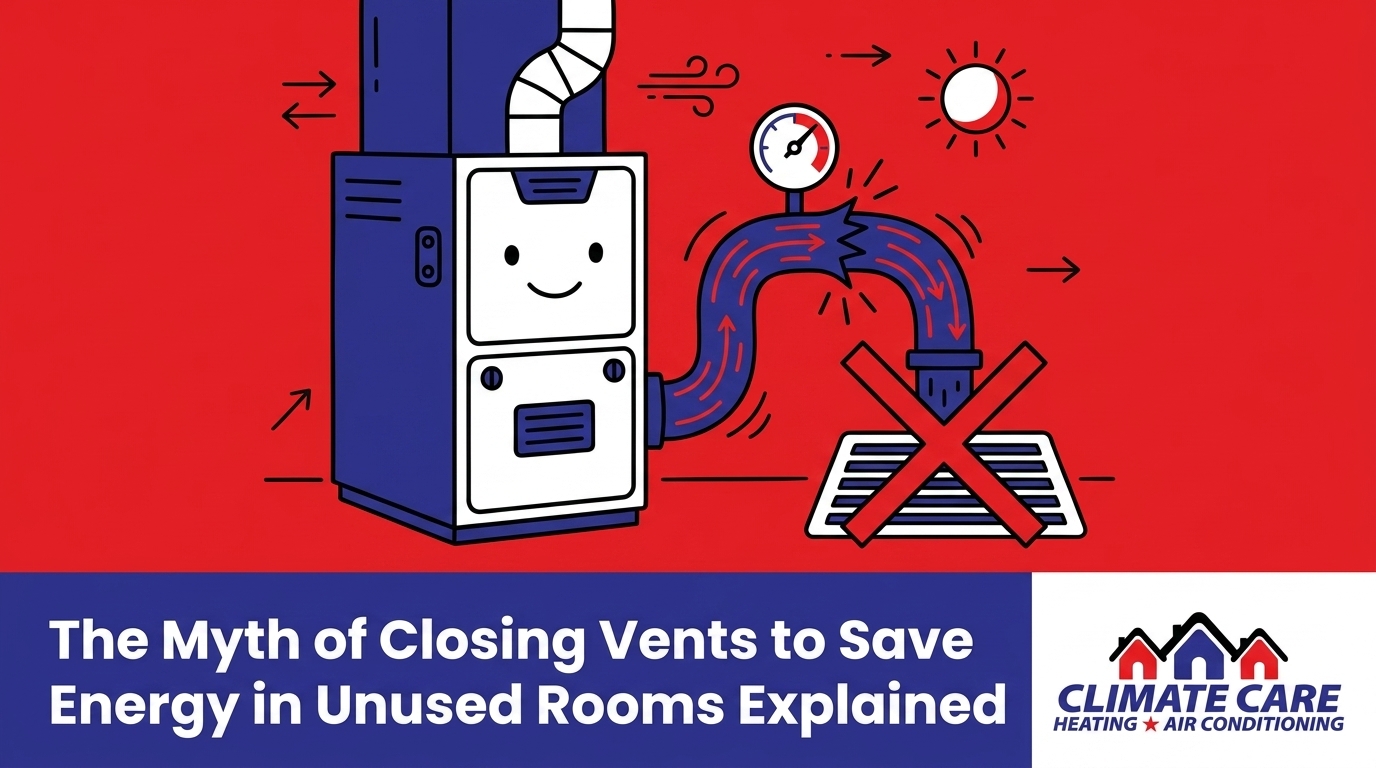
Closing a register in a guest bedroom or formal dining room seems like a smart, practical way to lower your monthly utility costs. However, the myth of closing vents to save energy in unused rooms is one of the most common misunderstandings in home maintenance—and it actually forces your entire cooling system to work significantly harder. The logic behind this myth is understandable. If you turn off a faucet, you save water. Many homeowners assume that if they close an air vent, they will save conditioned air and redirect it to the living spaces they actually use. Unfortunately, central air conditioning systems do not operate like household plumbing.
Your home's heating and cooling system is a carefully balanced, closed-loop network. It was designed and sized based on the total square footage of your house, not just the rooms you happen to occupy on a given afternoon. When you shut off supply registers, you disrupt this delicate balance. Instead of saving energy, you create a bottleneck that strains your equipment, decreases your indoor comfort, and increases your risk of a sudden breakdown right in the middle of July peak summer heat. Modern air conditioners require a specific, constant volume of air to function correctly, and cutting off that airflow initiates a chain reaction of hidden problems.
If you are looking for professional ductwork services or need to schedule an AC tune-up in Manteca, our team can help you optimize your home's airflow the right way.
To understand why shutting registers is harmful, you first need to understand how your system breathes. Central air systems rely on a concept called static pressure. Static pressure is the resistance to airflow within your ductwork. A well-designed HVAC system maintains a specific, balanced static pressure that allows the blower motor to push cold air out and pull warm air in with minimal effort.
Think of your blower motor like your own lungs. If you go for a brisk walk while breathing normally, your lungs handle the workload easily. Now, place a narrow cocktail straw in your mouth and try to take those same deep breaths while walking. Your lungs will immediately struggle, working twice as hard just to pull in a fraction of the air. When you close vents in your home, you are effectively forcing your HVAC system to breathe through a straw. The resulting increased static pressure forces the blower motor to strain against trapped air.
When a professional installs a modern HVAC system, they perform precise mathematical calculations known as Manual J (to determine the heating and cooling load of the house) and Manual D (to design the ductwork to handle that load). These calculations ensure that the exact right amount of air—measured in Cubic Feet per Minute (CFM)—reaches every room.
Because air always follows the path of least resistance, closing a vent does not magically tell the system to produce less air. The unit still pushes the exact same volume of air into the ductwork. When that air hits a closed register, it has nowhere to go, destroying the equilibrium the system was designed to maintain.
• All Vents Open — Airflow Volume (CFM): Balanced and consistent — Static Pressure Level: Normal / Designed — Equipment Impact: System operates efficiently with minimal wear.
• 1-2 Vents Closed — Airflow Volume (CFM): Slightly restricted — Static Pressure Level: Elevated — Equipment Impact: Minor strain on blower motor; potential for small duct leaks.
• Multiple Vents Closed — Airflow Volume (CFM): Severely restricted — Static Pressure Level: Dangerously High — Equipment Impact: High risk of frozen coils, motor failure, and severe energy waste.

When the air produced by your air conditioner hits a closed register, it does not simply stop and wait patiently. The blower motor continues to force massive amounts of air into the supply ducts. This creates an immediate backup of air, causing the pressure inside the sheet metal or flexible tubing to spike dramatically.
Ductwork is rarely 100% airtight. Even in newly built homes, ducts are assembled in sections and joined with tape, mastic, or mechanical fasteners. Under normal operating conditions, these seals hold up perfectly well. However, when faced with significantly increased static pressure, the trapped air looks for any possible escape route.
The Department of Energy (DOE) notes that the average home already loses a portion of its conditioned air to duct leaks. When you close vents, the elevated pressure exacerbates even the most minor duct flaws. Instead of blowing cold air into your guest bedroom, the system forces that expensive, conditioned air out through tiny seams and joints.
Where does this air go? Usually straight into unconditioned spaces.
• The Attic: Pressurized cold air escapes into the sweltering attic space, completely wasting the energy used to cool it.
• The Crawlspace: Conditioned air gets pushed under the house, providing zero comfort to your living areas.
• Inside Wall Cavities: Air leaks behind drywall, sometimes leading to hidden moisture or condensation issues.
Blowing cold air into your attic defeats the entire purpose of closing the vent in the first place. You are still paying to cool that air, but you are receiving absolutely no benefit from it inside the house. Correcting severe duct pressure issues often requires professional air conditioning services to diagnose the extent of the leakage and re-seal the compromised joints.
The most immediate and dramatic consequence of restricted airflow is a frozen evaporator coil. To understand why this happens, you have to look at how an air conditioner actually cools your home. Your AC does not "create" cold air; rather, it removes heat from the air inside your house.
The evaporator coil, located inside your indoor unit, is filled with extremely cold liquid refrigerant. For the system to work, the blower motor must constantly push warm, unconditioned air from your home over this coil. The refrigerant absorbs the heat from the air, vaporizes, and carries that heat outside.
When you close vents, the volume of warm air flowing over the coil drops significantly. Without that constant supply of heat to absorb, the refrigerant remains too cold. The temperature of the coil quickly drops below freezing. Any natural humidity or condensation in the air immediately freezes to the surface of the metal fins. Within a few hours, the entire coil can become encased in a solid block of ice, which completely halts the cooling process.
In Manteca's extreme Central Valley heat, AC systems already operate at maximum capacity with practically zero margin for error. During July peak summer heat, restricting airflow by closing even a few vents almost guarantees a freeze-up. If you notice your AC is blowing air but not cooling, a frozen coil is often the culprit, and closed vents are frequently the root cause.
While a frozen coil is a temporary (though highly frustrating) issue, the long-term mechanical strain caused by closed vents can permanently damage your equipment. The heart of your system's airflow is the blower motor. Its sole job is to push conditioned air through the supply ducts and pull unconditioned air back through the return ducts.
When a blower motor has to fight against blocked vents and increased static pressure, it works much harder than it was designed to. If your system uses a standard motor, the restriction causes it to overheat as it struggles against the trapped air. Over time, this excessive heat degrades the motor's internal components and wiring.
If you have a newer, high-efficiency system with a variable-speed (ECM) motor, the situation is slightly different but equally damaging. ECM motors are "smart"—they are programmed to maintain a specific airflow no matter what. When they sense the resistance from closed vents, they automatically ramp up their speed to push past the blockage. This means the motor draws significantly more electricity, completely negating any perceived energy savings from closing the room.
Ultimately, both types of motors face a high risk of premature failure when subjected to chronic airflow restriction. Because the blower motor is shared by both your air conditioner and your furnace, burning it out during the summer will also leave you stranded without heat, impacting both your summer cooling and your winter heating services.
Understanding the myth of closing vents to save energy in unused rooms is only half the battle. If your goal is to lower your cooling costs and manage your indoor climate more efficiently, there are several safe, proven methods that will not put your equipment at risk during July peak summer heat.
Instead of choking off your system's airflow, consider these proactive alternatives:
1. Upgrade to a Smart Thermostat: A smart thermostat learns your family's schedule and adjusts the temperature automatically. You can allow the house to get slightly warmer while you are away at work, then cool it down just before you return. This reduces the overall workload on the system without disrupting static pressure.
2. Utilize Ceiling Fans Properly: Ceiling fans do not lower the temperature of a room, but they do create a wind-chill effect on your skin. By running fans in the rooms you are actively occupying, you can comfortably set your thermostat a few degrees higher. Just remember to turn the fans off when you leave the room.
3. Invest in Professional Duct Sealing and Insulation: If you want to stop wasting energy, the best place to start is your attic. Having your ductwork professionally sealed prevents conditioned air from escaping. Adding insulation helps keep the heat out of your living spaces, reducing the total cooling load your AC has to handle.
4. Schedule Pre-Season Maintenance: Ensuring your system is clean and balanced is the best way to maximize efficiency. One local homeowner reached out for a thorough inspection before the intense summer weather arrived. Our technician, Christopher Hayes, performed the inspection, carefully evaluating the system's airflow, checking the blower motor, and ensuring the coils were clean. Because the system was checked and balanced early, it operated flawlessly through the heavy summer workload without needing any vents closed.
By focusing on the overall health and efficiency of your home's thermal envelope, you can achieve the lower utility bills you want without gambling with the health of your HVAC system.
No, closing vents does not save money and often increases your energy costs. When you shut registers, your blower motor has to work harder against the trapped air, which causes it to draw more electricity. Additionally, the excess pressure can force cold air out through minor leaks in your ductwork, meaning you are paying to cool your attic or crawlspace instead of your living areas.
Yes, routinely closing vents can cause significant damage to your air conditioning system. The restricted airflow causes the evaporator coil to drop below freezing, which can encase the system in ice and cause the compressor to fail. It also places immense mechanical strain on the blower motor, leading to overheating and premature failure.
As a general rule, you should never close more than 10% of the vents in your home. For most average-sized houses, this means you might be able to safely close one small register without causing immediate harm. However, keeping all vents open is always the safest and most efficient way to operate a modern, balanced HVAC system.
Your AC coil needs a constant flow of warm air from your home to absorb heat and keep the refrigerant at the proper temperature. When vents are closed, the volume of warm return air drops significantly. Without that heat, the refrigerant inside the coil gets too cold, causing normal condensation to freeze into a solid block of ice.
Static pressure is the measurement of resistance to airflow within your duct system. It matters because HVAC systems are engineered to operate within a very specific pressure range. When static pressure gets too high—such as when vents are closed or a filter is severely clogged—the system cannot circulate air properly, leading to poor comfort and equipment breakdowns.
Believing the myth of closing vents to save energy in unused rooms is a common mistake, but it is one that can easily be avoided once you understand how your system breathes. By keeping your registers open and focusing on safe efficiency upgrades, you protect your equipment from unnecessary strain. When you need to ensure your system is perfectly balanced and ready for the heat, reaching out for a professional airflow evaluation is the best way to guarantee a cool, comfortable home all summer long.
Our customers love our service and support.

Had Climate Care inspect our HVAC before summer. Christopher Hayes was polite, knowledgeable, and efficient. Great service from the office team—highly recommend!
Alex Corona did a thorough furnace check-up today, showing before-and-after photos and answering all my questions. I’m happy with his work and highly recommend him. Great job—happy customer!
Alan C. serviced my furnace today and gave me a courtesy call before arriving. He was very professional, provided great service, and shared lots of pictures. Definitely a five-star experience—I’ll use them again!
On 02/19/2025, Alan inspected my furnace and did a great job explaining everything. He was professional, hardworking, and focused on customer satisfaction. Highly recommend requesting him!