Does a High SEER Rating Matter for Heating or Just Air Conditioning?
That high SEER rating on your outdoor unit only measures summer cooling efficiency. Discover which HVAC ratings actually impact your winter heating performance.
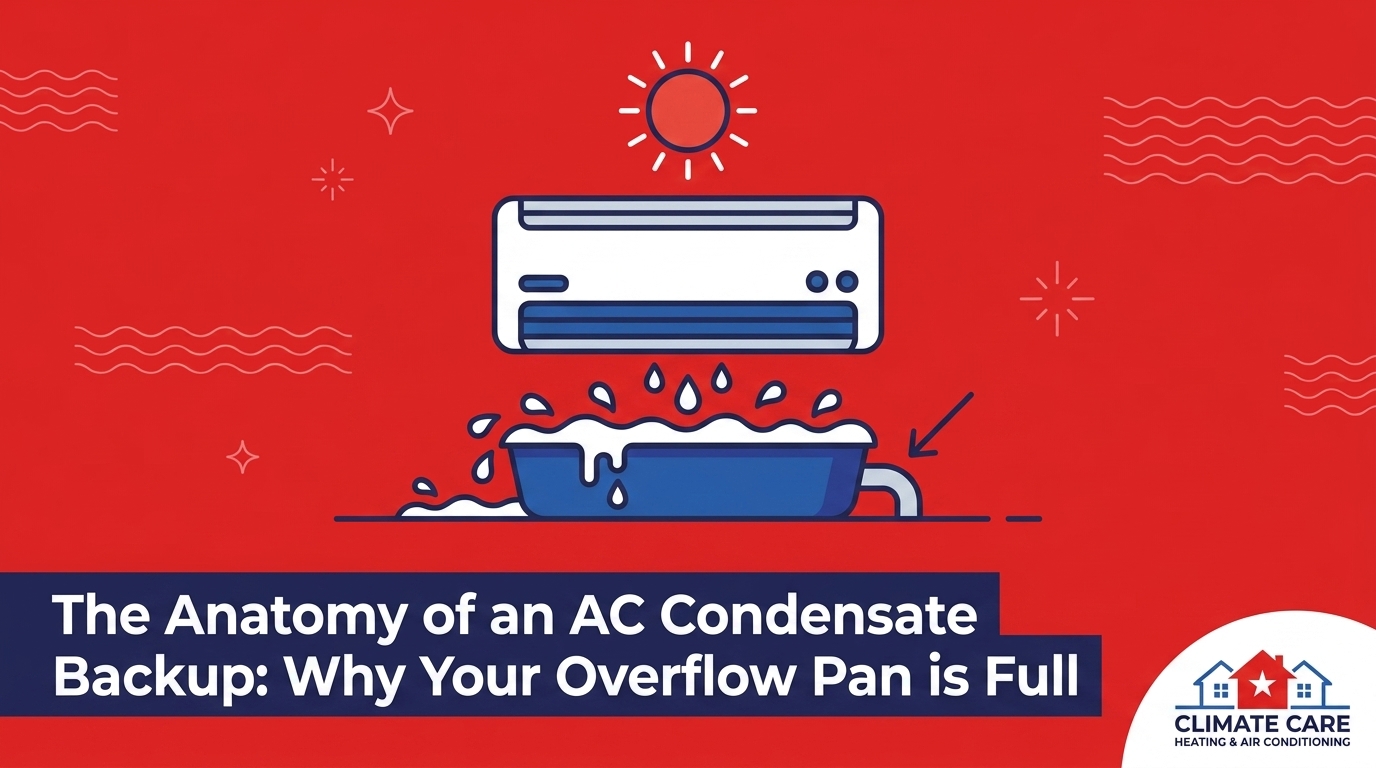
Your AC shuts off unexpectedly in the middle of a heatwave, leaving you to research the anatomy of an AC condensate backup: why your overflow pan is full. You walk over to your indoor unit, hoping for a simple fix, only to discover a massive puddle forming on the floor or an overflow pan filled to the brim with murky water. During late August end-of-season cooling, right as families are transitioning into the back-to-school routine, this sudden loss of comfort is incredibly frustrating. The house heats up quickly, and the sight of standing water naturally sparks fears of expensive water damage and a permanently broken air conditioner.
However, this unexpected shutdown is likely a built-in safety mechanism doing exactly what it was designed to do. Before you panic about replacing your entire system, it helps to understand the anatomy of the backup and why your equipment is actively protecting your home from a much worse disaster.
If you are dealing with a sudden shutdown, our experts can inspect your air conditioning systems and perform a professional AC tune-up in Manteca to restore your comfort safely.
When an air conditioning system experiences a condensate backup, the symptoms are usually sudden and unmistakable. At Climate Care Heating & Air Conditioning, our team receives dozens of frantic calls about this exact scenario every late summer. You might notice a blank thermostat screen, a system that blows warm air, or an outdoor compressor that refuses to kick on. These are all secondary symptoms of the primary issue: water pooling where it shouldn't. By recognizing that the water is the root cause of the shutdown, you can avoid wasting time troubleshooting electrical breakers or thermostat batteries.
To understand why a backup happens so quickly, you first need to understand the sheer volume of water moving through your system. Central air conditioning systems do not just cool the air; they actively dehumidify it. As warm indoor air passes over the freezing cold evaporator coil, moisture is pulled out of the air, much like water droplets forming on the outside of a cold glass of iced tea on a hot afternoon.
This dehumidification process runs continuously whenever your system is actively cooling. The moisture drips off the coil into a primary drain pan hidden inside the unit. From there, it flows down a narrow PVC pipe (the condensate drain line) and safely exits your home. Most homeowners never see this process happening, which makes it easy to underestimate just how much water is being moved.
According to the Department of Energy, a standard central air conditioning system can produce between 5 and 20 gallons of condensation per day during peak summer operation. In our experience working on Manteca CA area homes, the intense Central Valley heat forces AC units to run continuously for hours on end, maximizing this condensation production. That is the equivalent of leaving a garden hose slowly trickling inside your walls all day long.
The danger arises when you contrast this massive daily water production with the capacity of your system's secondary drain pan. The secondary overflow pan—the shallow metal or plastic tray sitting beneath your indoor unit—is only designed to hold a few gallons of water. If the primary drain line becomes blocked, that 5 to 20 gallons of daily condensation has nowhere to go but into your home.
• High Indoor Humidity — Impact on Condensation Production: Increases water extraction; the system pulls more moisture from the air before hitting the target temperature.
• Continuous Runtimes — Impact on Condensation Production: Maximizes daily volume; systems running non-stop in extreme heat produce the highest daily gallon count.
• Dirty Air Filters — Impact on Condensation Production: Restricts airflow, causing the coil to run colder and freeze, leading to massive water dumps when the ice melts.
• Oversized AC Units — Impact on Condensation Production: Short-cycles too quickly to properly dehumidify, leaving the home feeling clammy and damp.
A condensate backup does not happen overnight. In our years of inspecting attic and closet HVAC units throughout the valley, we've observed that it is the result of a slow, biological chain reaction that builds up over months of continuous operation. By the time late August end-of-season cooling arrives, your system has accumulated enough debris to trigger a complete blockage. Here is the step-by-step breakdown of how that clog forms.
1. Stage 1: Accumulation
The process begins with microscopic airborne particulates. Even with a good air filter, tiny amounts of dust, pet dander, and organic matter bypass the filter and settle on the cold evaporator coil. As condensation drips off the coil, it washes this dust down into the primary condensate pan. The pervasive dust of the Central Valley acts as a major catalyst during this stage.
2. Stage 2: Biological Growth
The primary drain pan is dark, damp, and warm—creating the perfect breeding ground for biological growth. The mixture of continuous summer condensation and organic dust feeds naturally occurring algae, mold, and bacterial slime (often referred to as zooglea). This slime begins to coat the bottom of the pan and the entrance to the drain line.
3. Stage 3: The Choke Point
As the biological sludge grows thicker, it slowly flows into the narrow PVC condensate drain line. The inside of this pipe is usually only 3/4 of an inch wide. The sticky algae catches more passing dust, creating a snowball effect. Eventually, this mass restricts water flow entirely, forming a solid choke point deep inside the plumbing.
4. Stage 4: The Backup
With the primary drain line completely blocked, the continuous flow of condensation has no escape route. The water backs up, overflowing the internal primary pan and spilling down into the secondary overflow pan located beneath the unit. The secondary pan rapidly fills to the brim, setting the stage for an emergency shutdown.
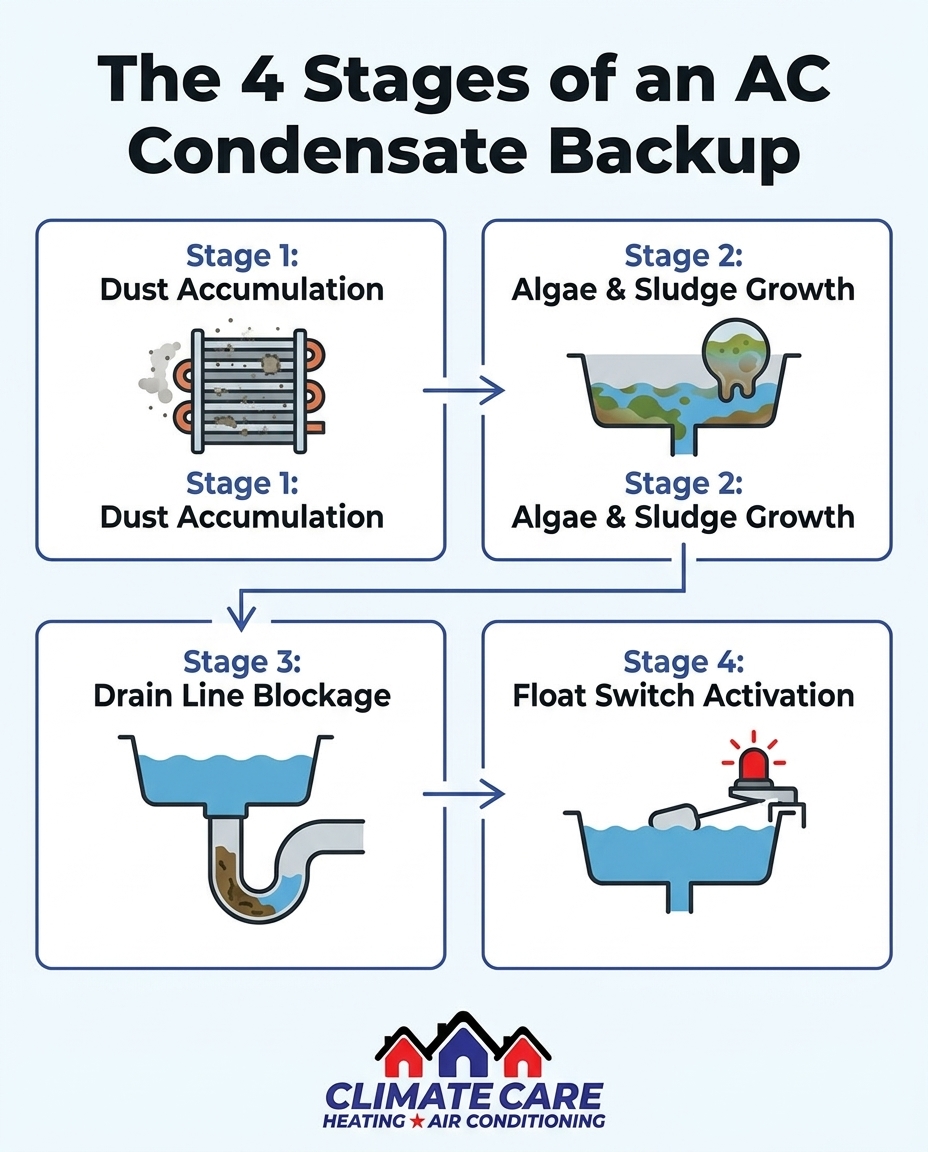
When your AC shuts down on a 100-degree afternoon, it is easy to view the system as broken. In reality, a small device called a float switch just saved you from a massive home repair bill. The float switch is a simple mechanical or electronic sensor located either inside the secondary drain pan or spliced directly into the primary drain line.
Its mechanics are incredibly straightforward. As the water level rises in the blocked pan, a small buoyant float rises along with it. Once the water reaches a critical depth, the rising float trips a microswitch. This instantly breaks the low-voltage electrical circuit connecting your thermostat to your air conditioner.
By cutting the power, the float switch immediately stops the outdoor compressor from running. If the compressor cannot run, the evaporator coil cannot get cold, and the system stops producing new condensation. This brilliant, simple mechanism halts the water production just inches before the pan overflows.
Without this unsung hero, those 5 to 20 gallons of daily condensation would spill over the edge of the pan. In Manteca CA area homes, where indoor units are often located in attics or upper-floor closets, an overflowing pan means water cascading through the ceiling. The float switch prevents thousands of dollars in ruined drywall, sagging ceilings, electrical shorts, and warped hardwood flooring.
When faced with a full overflow pan, many homeowners are tempted to search for a quick DIY fix. While minor maintenance can help prevent issues, clearing a hard blockage requires specialized equipment. Late-season sludge is not just loose dirt; it is deeply compacted, sticky biological matter tightly wedged inside the plumbing.
The limits of household cleaners: Pouring harsh, unapproved chemicals down the line is a common mistake. Bleach can severely corrode the delicate copper and aluminum fins of your evaporator coil, and it can degrade the PVC glue holding your drain pipes together. Furthermore, standard household vacuums rarely have the sustained suction power needed to dislodge a compacted algae clog located twenty feet down a pipe.
Professional intervention: Resolving the issue correctly requires professional tools. Technicians use specialized high-powered wet/dry vacuums and regulated compressed air (often nitrogen) to safely blast the blockage out of the line without rupturing the PVC joints. Once the line is physically cleared, they apply professional-grade, time-release biocides that prevent the algae from immediately growing back.
Working with a brother-owned, local HVAC company like Climate Care Heating & Air Conditioning means you receive a trustworthy, hands-on diagnostic approach. We focus on solving the root cause of the biological growth rather than just applying a temporary fix. Establishing a routine maintenance plan is the best way to introduce preventative care, ensuring your lines are cleared long before the summer heat peaks.
Understanding the mechanics of your condensate line helps you recognize when it is time to seek professional help for clearing a clogged AC drain. Here are the most common questions our team fields from homeowners during late August end-of-season cooling.
Your AC drain pan is full of water because the primary condensate drain line is clogged with dirt, algae, or sludge. When the water cannot flow outside through the designated PVC pipe, it is forced to back up into the secondary overflow pan. This is a clear indicator that your system requires physical clearing to restore proper drainage.
The primary pan located directly under the evaporator coil will always be wet during operation, but the secondary overflow pan should remain completely dry. The secondary pan (often visible under the unit in an attic or closet) is strictly an emergency backup. If you see standing water in this outer pan, it indicates a blockage in the main line that needs immediate attention.
When the AC overflow pan fills with water, a safety device called a float switch is triggered. This switch intentionally shuts down the entire air conditioning system to prevent the pan from overflowing. By cutting the power, the system stops producing condensation, protecting your home's ceilings and floors from severe water damage.
While it could be an electrical issue, a tripped float switch due to a clogged drain line is a leading cause of sudden summer shutdowns. The system shuts down intentionally to protect your property from flooding. Because air conditioners run constantly in the summer heat, they produce massive amounts of water, making clogs highly common during the hottest months.
An AC float switch acts as an emergency circuit breaker triggered by buoyancy. When water backs up into the drain line or overflow pan, it lifts a small float mechanism. Once the float reaches a certain height, it breaks the low-voltage electrical connection to the thermostat, immediately stopping the air conditioner from running.
If the line is fully clogged with algae, it will not drain naturally and requires physical removal of the blockage. Evaporation alone is not enough to clear a full secondary pan, especially in a humid environment. You must have the line professionally suctioned or blown out before the system can safely resume operation.
Finding a puddle of water and experiencing a sudden loss of cooling is stressful, but it is important to remember that a full pan is a sign your system's safety features are working properly. The float switch did its job, halting the production of condensation and saving your home from extensive water damage.
While it is tempting to try and force the system back on, bypassing safety switches or attempting risky DIY plumbing fixes can lead to severe property damage and costly equipment failures. The deeply compacted sludge that our technicians routinely clear in Manteca CA area homes requires targeted, professional removal to ensure the line is completely clear.
If your system has shut down and your pan is full, do not wait for the water to evaporate. Reach out to local HVAC experts to safely drain the standing water, clear the stubborn clog, and restore your cooling quickly and safely.
Our customers love our service and support.

Had Climate Care inspect our HVAC before summer. Christopher Hayes was polite, knowledgeable, and efficient. Great service from the office team—highly recommend!
Alex Corona did a thorough furnace check-up today, showing before-and-after photos and answering all my questions. I’m happy with his work and highly recommend him. Great job—happy customer!
Alan C. serviced my furnace today and gave me a courtesy call before arriving. He was very professional, provided great service, and shared lots of pictures. Definitely a five-star experience—I’ll use them again!
On 02/19/2025, Alan inspected my furnace and did a great job explaining everything. He was professional, hardworking, and focused on customer satisfaction. Highly recommend requesting him!