Essential Emergency HVAC Repair Tips for the Central Valley Homeowners
When the heat hits triple digits in the Central Valley, your HVAC system isn't just a luxury; it's a lifeline. Understanding the mechanics of your system can help you stay calm when the air stops flowing. Most modern systems are complex, but they often fail due to a few predictable culprits.
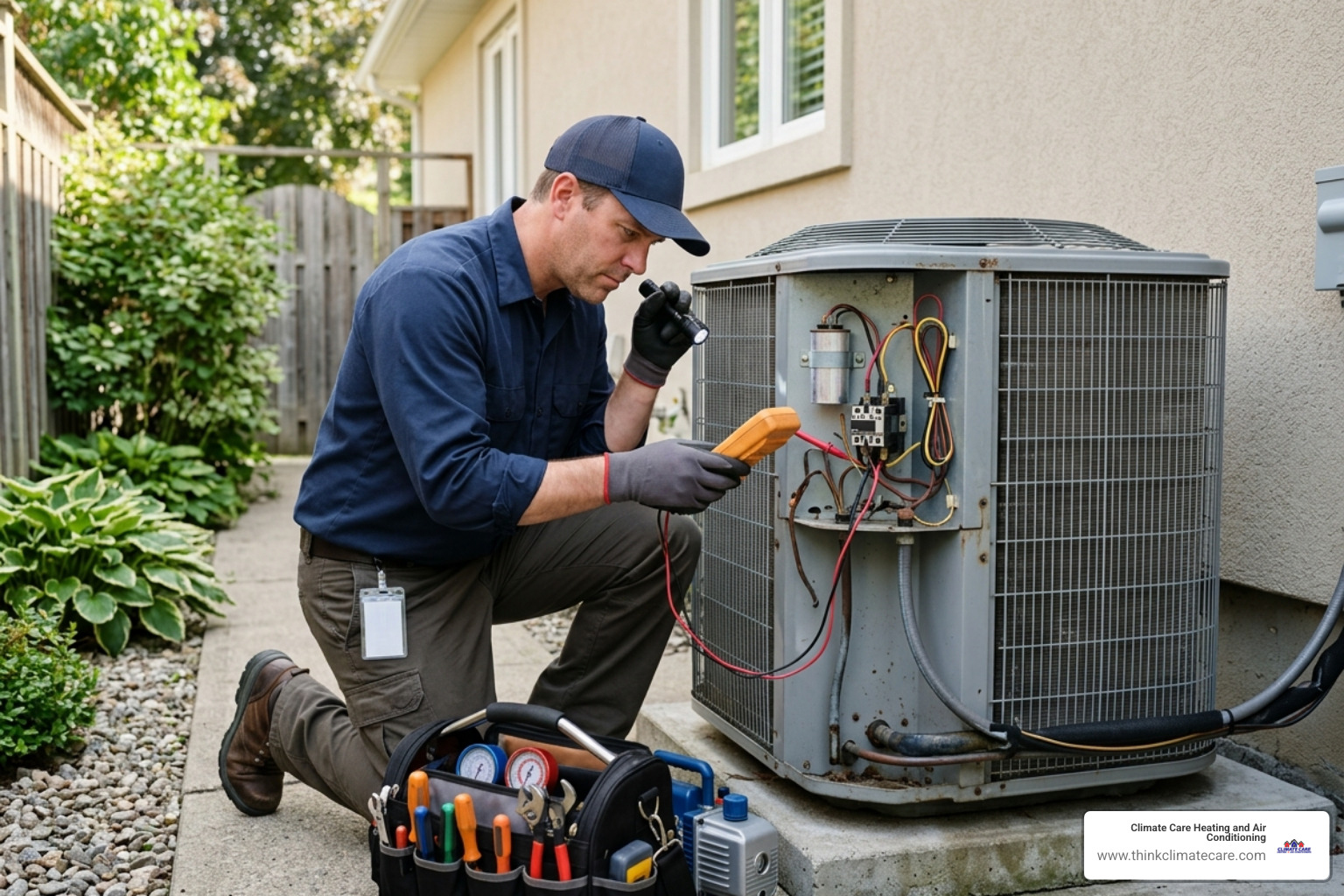
One of the most common sights during a Central Valley heatwave is a frozen evaporator coil. You might think, "Wait, it's 105 degrees outside, how is my AC frozen?" It happens when airflow is restricted or refrigerant is low, causing the coil to drop below freezing and turn humidity into a block of ice. Other times, you might notice a strange electrical odor—like burning plastic—which often signals a failing capacitor or a motor that has finally given up the ghost after weeks of non-stop operation.
If your system is completely unresponsive, it could be a communication error between your thermostat and the control board. Before you assume the worst, it helps to understand how these components talk to each other. For a deeper dive into the technical side of things, check out our guide on HVAC system diagnostics.
Troubleshooting Before Calling for Emergency HVAC Repair Tips for the Central Valley Homeowners
Before you pick up the phone to call for an emergency technician on a busy July 4th weekend, there are several "DIY" checks that can resolve the issue in minutes. We often find that homeowners can save themselves a lot of stress by following a simple process of elimination.
• The Filter Test: In the dusty conditions of cities like Ceres, Lodi, and Tracy, air filters clog faster than the manufacturer might suggest. A filthy filter forces your system to work twice as hard, often leading to overheating or frozen coils. If your filter looks like it’s growing a gray carpet, swap it out immediately.
• Thermostat Gremlins: It sounds simple, but check your settings. Ensure it’s set to "Cool" and the fan is on "Auto." If the display is blank, the batteries might have died. Even smart thermostats can have "dumb" moments where they lose connection to the Wi-Fi or the base plate.
• The Breaker Box: HVAC systems pull a lot of juice. During a heatwave, the power grid and your home’s electrical panel are under immense strain. Check your circuit breaker; if it's tripped, flip it back once. If it trips again immediately, stop—that’s a sign of a short circuit that needs professional eyes.
• Outdoor Clearance: Your outdoor condenser unit needs to "breathe" to release the heat it gathered from inside your home. If it’s surrounded by overgrown weeds, leaf litter, or those rogue tumbleweeds we see in the Valley, it will eventually shut down to protect the compressor.
If you’ve checked these and the unit still isn't cooling, you might be dealing with a freeze-up. To understand why this happens and what to do, read more about why AC units freeze up.
Identifying True HVAC Emergencies in Extreme Heat
How do you know when you can wait until Monday morning and when you need to call for help at 2 AM? In the Central Valley, the "safety" threshold is much lower because of our extreme temperatures.
A true emergency is any situation that threatens your health, your safety, or the integrity of your home. If you have elderly residents or infants in a home that has reached 85°F+ indoors, that is a health emergency. Beyond temperature, keep an ear and a nose out for these red flags:
1. Burning Smells: This often indicates electrical components are melting or wires are shorting. Turn off the power at the breaker immediately.
2. Loud Grinding or Screeching: This usually means a bearing has failed or a fan blade is loose. Continuing to run the system could turn a simple motor replacement into a total system loss.
3. Active Water Leaks: If you see water dripping from your ceiling or pooling around your furnace, your condensate drain is likely clogged. This can lead to thousands of dollars in structural damage and mold growth.
4. Complete Loss of Cooling: If the air coming out of the vents is room temperature and the outdoor unit isn't humming, your compressor or capacitor may have failed.
Recognizing these early can prevent a total breakdown. Learn more about the warning signs of HVAC system failure to stay ahead of the curve.
Immediate Actions for Common System Failures
When things go wrong, your first priority is mitigation. Here is a quick reference table to help you decide your next move.
• Warm air from vents — Likely Cause: Clogged filter or low refrigerant — Action Level: Urgent — Immediate Step: Change filter; call for AC blowing hot air service.
• Loud banging/grinding — Likely Cause: Broken fan or loose part — Action Level: Emergency — Immediate Step: Shut system off immediately.
• Water pooling near unit — Likely Cause: Clogged drain line — Action Level: Urgent — Immediate Step: Turn off system; check AC drain line clogs.
• System won't turn on — Likely Cause: Tripped breaker or thermostat — Action Level: Troubleshooting — Immediate Step: Reset breaker; check batteries.
• Ice on copper lines — Likely Cause: Airflow restriction — Action Level: Urgent — Immediate Step: Turn off AC; set fan to "On" to thaw.
One of the most frustrating issues is "short cycling," where the AC turns on and off every few minutes. This is incredibly hard on the compressor and is often a sign of a failing sensor or an oversized unit struggling with the heat. If you notice this, it’s best to call for a HVAC system diagnostic before the motor burns out entirely.
Preventing Future Breakdowns and Choosing Reliable Service
The best way to handle an HVAC emergency is to make sure it never happens in the first place. While we can’t control the weather in Sacramento or Stockton, we can control how prepared our equipment is to handle it.
How Maintenance Prevents Emergency HVAC Repair Tips for the Central Valley Homeowners
Think of your HVAC system like a car. You wouldn't drive from Manteca to Los Angeles in 110-degree heat without checking your oil and coolant, right? Your AC works much harder than your car during a Valley summer.
Regular maintenance is the "secret sauce" to avoiding the 10 PM emergency call. During a professional tune-up, a technician will:
• Clean the Coils: Dirty coils can't shed heat effectively, which is the leading cause of "no cooling" calls.
• Check Refrigerant Levels: Even a small leak can cause the system to freeze up. Finding and solving refrigerant line problems early saves the compressor.
• Tighten Electrical Connections: Heat causes metal to expand and contract, which can loosen wires and lead to HVAC electrical problems.
• Clear the Drain Line: We proactively clear the "sludge" that builds up in your drain lines to prevent water damage.
For more proactive steps, read our 8 HVAC safety tips for homeowners and discover how simple habits can prevent a furnace failure.
Selecting a 24/7 Repair Partner in the Central Valley
If you do find yourself in a "no-cool" situation in Modesto, Turlock, or Clovis, you need a partner who knows the local climate. A company based in a cooler coastal area might not understand the sheer intensity of a Central Valley heatwave and how it affects specific brands and models.
When looking for a 24/7 repair service, prioritize:
• Local Expertise: You want someone who knows the neighborhoods in Salida, Ripon, and Oakdale.
• NATE Certification: This is the gold standard for technicians, ensuring they have the technical chops to fix it right the first time.
• Stocked Trucks: An emergency call isn't helpful if the tech has to wait three days for a part to be shipped.
• Transparent Communication: You should know exactly what is wrong and what the plan is to fix it.
Whether you need 24 hour HVAC in Manteca CA or an emergency AC repair in Sacramento, choosing a reliable partner is half the battle.
Climate Care Heating and Air Conditioning: Your Holistic HVAC Partner
At Climate Care, we’ve made it our mission to serve the communities of the Central Valley—from the quiet streets of Escalon and Woodbridge to the bustling hubs of Elk Grove and Roseville. We don't just "fix boxes"; we provide holistic HVAC care.
What does that mean for you? It means we focus on performance, cost-efficiency, and environmental standards. We want your system to run so well that you forget it’s even there. Our comprehensive membership plan is designed to give you peace of mind, offering significant savings and priority service so that if an emergency does happen, you’re at the front of the line.
We are proud to serve homeowners across:
• South Valley: Turlock, Patterson, and Ceres.
• Central Hubs: Manteca, Lathrop, Modesto, and Stockton.
• Greater Sacramento: North Highlands, Natomas, Rancho Cordova, and Fair Oaks.
If you are currently facing a "comfort crisis," don't suffer through the heat. Whether you need emergency HVAC service in Stockton or a 24-hour AC repair in Stockton, our team is ready to help. We also provide specialized support for our neighbors in Ripon and Modesto.
The Central Valley heat is relentless, but your HVAC system doesn't have to be a source of stress. By following these emergency hvac repair tips for the central valley homeowners, staying on top of your maintenance, and having a trusted partner on speed dial, you can keep your home a cool sanctuary all summer long.
For more information on how to protect your home and family, explore our guide on preventing AC breakdowns during summer or learn about how to find fast AC repair in Manteca. Stay cool, stay safe, and give us a call whenever you need a helping hand.