Why Scheduling Maintenance in October Beats the November Rush
Waiting for the first freeze to test your heater means facing booked dispatch boards. See the operational reality of HVAC scheduling and how early booking helps.
Knowing how to maintain your heating and cooling system is one of the most important things you can do as a homeowner — especially when nearly half of your annual energy bill goes straight to heating and cooling costs.
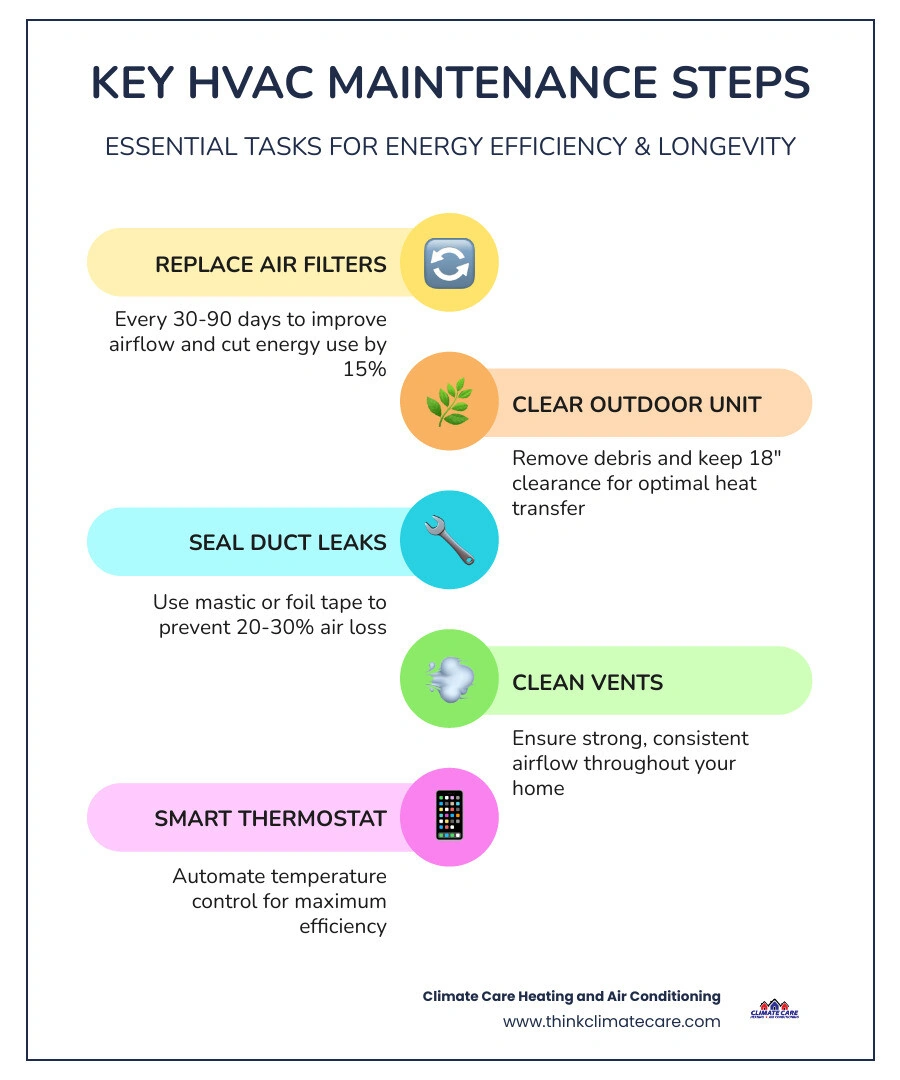
Here is a quick overview of the key steps to maintain your HVAC system:
1. Change or clean air filters every 30–90 days depending on pets, allergies, and dust levels
2. Clear the outdoor unit of debris and keep plants at least 18 inches away
3. Seal duct leaks using mastic sealant or foil tape to prevent 20–30% air loss
4. Clean vents and registers so airflow stays strong and consistent
5. Check the condensate drain line every few months to prevent clogs and water damage
6. Install a smart or programmable thermostat to automate efficiency
7. Schedule a professional tune-up every spring for cooling and every fall for heating
Most homeowners don't think about their HVAC system until something goes wrong. But by then, the damage — and the cost — has already been done. About two-thirds of the energy used in the average home goes to space heating and cooling alone. Yet fewer than half of homeowners have had their system serviced in the past year.
Regular maintenance keeps your system running efficiently, extends its lifespan, and helps you avoid the stress of a breakdown during a heat wave or cold snap. Whether you're a long-time homeowner or new to the responsibility, this guide walks you through everything you need to know.
When we talk about how to maintain your heating and cooling system, we aren't just talking about keeping the house comfortable. We are talking about protecting one of the most expensive investments in your home. In April 2026, as energy standards continue to evolve, staying on top of these tasks is more critical than ever.
Did you know that airflow problems alone can reduce your system's efficiency by up to 15%? When airflow is restricted, your system has to work twice as hard to move the same amount of air. This leads to higher energy bills and premature wear and tear on the blower motor.
To help you stay on track, we’ve put together a list of monthly DIY tasks that every homeowner can—and should—perform.
• Inspect Air Filters: This is the #1 most important task.
• Visual Inspection: Look for signs of leaks or ice on the refrigerant lines.
• Clear Vents: Ensure no furniture, rugs, or drapes are blocking the supply or return registers.
• Smell and Sound Check: Listen for new rattles or bangs and sniff for any "dusty" or "burning" odors.
• Outdoor Debris Check: Remove leaves, twigs, or grass clippings from the condenser.
• Filter Replacement — DIY (Homeowner): Yes — Professional (Technician): Included in Tune-up
• Cleaning Vents/Registers — DIY (Homeowner): Yes — Professional (Technician): Deep Cleaning Available
• Clearing Outdoor Debris — DIY (Homeowner): Yes — Professional (Technician): Deep Coil Wash
• Checking Refrigerant Levels — DIY (Homeowner): No (Requires License) — Professional (Technician): Yes
• Electrical/Safety Checks — DIY (Homeowner): No — Professional (Technician): Yes
• Lubricating Moving Parts — DIY (Homeowner): No — Professional (Technician): Yes
• Calibrating Thermostat — DIY (Homeowner): Basic Programming — Professional (Technician): Precision Testing
The most frequent question we get is: "How often should I actually change my filter?" The answer depends on your lifestyle. While the standard advice is every 90 days, if you have pets (hello, shedding season!) or family members with allergies, you should be checking it every 30 days.
Dust accumulation is the silent killer of HVAC systems. It coats the sensitive internal components, leading to overheating. For those living in areas like Sacramento or Modesto, where seasonal pollen and dust can be high, checking your filter is non-negotiable. If you're unsure about the process, check out our Air Filter Replacement Sacramento Guide. Neglecting this simple task can lead to catastrophic failure; learn more about What Happens When You Dont Change Your HVAC Air Filters to see why it’s worth the five minutes it takes to swap them out.
Beyond the filters, look outside. Your outdoor condenser unit needs room to "breathe." We recommend maintaining at least an 18-inch to 24-inch clearance around the entire unit. Trim back shrubs, remove weeds, and ensure that your garden hasn't staged a takeover of the metal cabinet.
The outdoor unit is where the heat exchange happens. If the coils are dirty, the heat has nowhere to go, and your system effectively "chokes." This is a major factor in how to maintain your heating and cooling system during the brutal summer heat waves we often see in the Central Valley.
One common issue is damaged or bent "fins"—the thin aluminum slats on the outside of the unit. If these are flattened, they block airflow. A professional can use a "fin comb" to straighten them out, but you can prevent damage by ensuring no high-pressure water from a hose or flying debris from a lawnmower hits them.
Keeping the area clear of foliage is vital. Trimming plants back at least two feet prevents leaves from getting sucked into the unit, where they can rot and cause corrosion or block the drain. For a deeper dive into preserving your AC’s heart, see our AC Maintenance Ultimate Guide or visit our dedicated AC Maintenance page.
Even if your furnace and AC are in perfect health, you could be losing money through your walls. In a typical house, 20 to 30 percent of the air that moves through the duct system is lost due to leaks, holes, and poorly connected ducts.
You can perform a basic inspection of accessible ductwork in your attic or crawlspace. Look for sections that have come apart or have visible gaps. Use mastic sealant or foil tape—never use standard "duct tape," as it actually dries out and fails quickly under HVAC temperature fluctuations. Sealing these gaps ensures the air you paid to heat or cool actually reaches your living room.
To further boost efficiency, consider a smart thermostat. These devices do more than just let you change the temp from your phone. They provide energy reports, remind you of filter changes, and can be programmed to lower energy use when you are at work or sleeping. This automation is a cornerstone of modern HVAC care. If you're looking to start the year right, reading about How to Thoroughly Clean Your HVAC System for the New Year provides great context on how these technologies fit into a clean, efficient home.
While DIY tasks are great for day-to-day operation, there are things only a trained professional should handle. HVAC systems involve high-voltage electricity, natural gas, and pressurized refrigerants—all of which require specialized tools and certifications.
During a professional visit, a technician does the "heavy lifting." This includes:
• Voltage and Amperage Measurement: Ensuring motors are drawing the correct amount of power.
• Lubrication: Oiling moving parts to reduce friction and electricity usage.
• Condensate Drain Cleaning: Using a vacuum or specialized brush to ensure the drain line isn't harboring algae or clogs that could flood your home.
• Refrigerant Charge Check: Ensuring you don't have a slow leak that is killing your efficiency.
If you have a gas furnace, professional maintenance isn't just about efficiency—it’s about safety. A technician will inspect the heat exchanger for cracks. A cracked heat exchanger can leak carbon monoxide (CO) into your home’s air supply, which is a life-threatening hazard.
We also check the gas connections and ensure the burner is producing a crisp blue flame. If you see a yellow or orange flame, that’s a sign of incomplete combustion and a major red flag. Tightening electrical connections is another "must-do," as loose wires are a leading cause of component failure and even house fires.
To understand the risks of skipping these checks, read The Hidden Heating Threat Why Every Home Needs Annual Furnace Inspection. For general heating system health, our Heater Maintenance section covers what you need to keep the shivers away.
Timing is everything. You don't want to find out your AC is broken on the first 100-degree day in July. We recommend scheduling your cooling maintenance in the late winter or early spring and your heating maintenance in the late summer or early fall.
By scheduling during these "shoulder seasons," you avoid the rush and ensure your system is at maximum capacity before the extreme weather hits. This preventative care is far cheaper than an emergency repair. For a breakdown of timing, see How Often Should You Service Your HVAC Unit A Complete Guide or our HVAC Preventative Maintenance Sacramento Guide.
Even with the best maintenance, systems can occasionally struggle. You should call a professional if you notice:
• Strange Noises: Squealing, banging, or grinding.
• Inconsistent Temperatures: One room is a sauna while the other is an icebox.
• Frequent Cycling: The system turns on and off every few minutes.
• Burning Smells: Especially if they persist after the first few minutes of the season.
Preparing for extreme weather also means checking your home's "envelope." Sealing gaps around windows and doors with weather stripping helps your HVAC system maintain a steady temperature without running 24/7.
At Climate Care Heating and Air Conditioning, we specialize in this holistic approach. Whether you are in Manteca, Stockton, or Elk Grove, we focus on performance and cost-efficiency. Our membership plans are designed to take the guesswork out of how to maintain your heating and cooling system, offering priority service and significant savings.
If you are ready to ensure your home stays comfortable year-round, visit our HVAC Maintenance Manteca page to see how we can help.
To wrap things up, here is your seasonal "cheat sheet" to keep your system happy in 2026 and beyond:
• Schedule a professional AC tune-up.
• Clean the outdoor condenser unit.
• Check and straighten coil fins.
• Test the thermostat's cooling mode.
• Change air filters every 30 days if the AC is running constantly.
• Monitor for any strange noises or rising energy bills.
• Keep the area around the outdoor unit clear of weeds and grass.
• Schedule a professional furnace inspection.
• Check CO detector batteries.
• Seal any air leaks in the home's windows or doors.
• Inspect accessible ductwork for gaps.
• Check filters regularly.
• Ensure the outdoor unit (if you have a heat pump) isn't buried in debris or covered. Note: Never cover a heat pump in winter as it needs airflow to provide heat!
• Keep all indoor vents open and unobstructed to maintain proper system pressure.
By following this guide, you’re doing more than just "fixing" things; you’re practicing proactive care. This not only saves you money on utility bills but also ensures that when the next big California heat wave hits, your home remains the cool sanctuary it’s meant to be.
If you're in the Manteca, Modesto, or Sacramento areas and need a hand with any of these steps, Climate Care is here to help. We believe in providing the best for our neighbors, ensuring your family breathes clean air and stays comfortable no matter what the thermometer says outside. Reach out to us today to get your system on a path to peak performance!
Our customers love our service and support.

Had Climate Care inspect our HVAC before summer. Christopher Hayes was polite, knowledgeable, and efficient. Great service from the office team—highly recommend!
Alex Corona did a thorough furnace check-up today, showing before-and-after photos and answering all my questions. I’m happy with his work and highly recommend him. Great job—happy customer!
Alan C. serviced my furnace today and gave me a courtesy call before arriving. He was very professional, provided great service, and shared lots of pictures. Definitely a five-star experience—I’ll use them again!
On 02/19/2025, Alan inspected my furnace and did a great job explaining everything. He was professional, hardworking, and focused on customer satisfaction. Highly recommend requesting him!