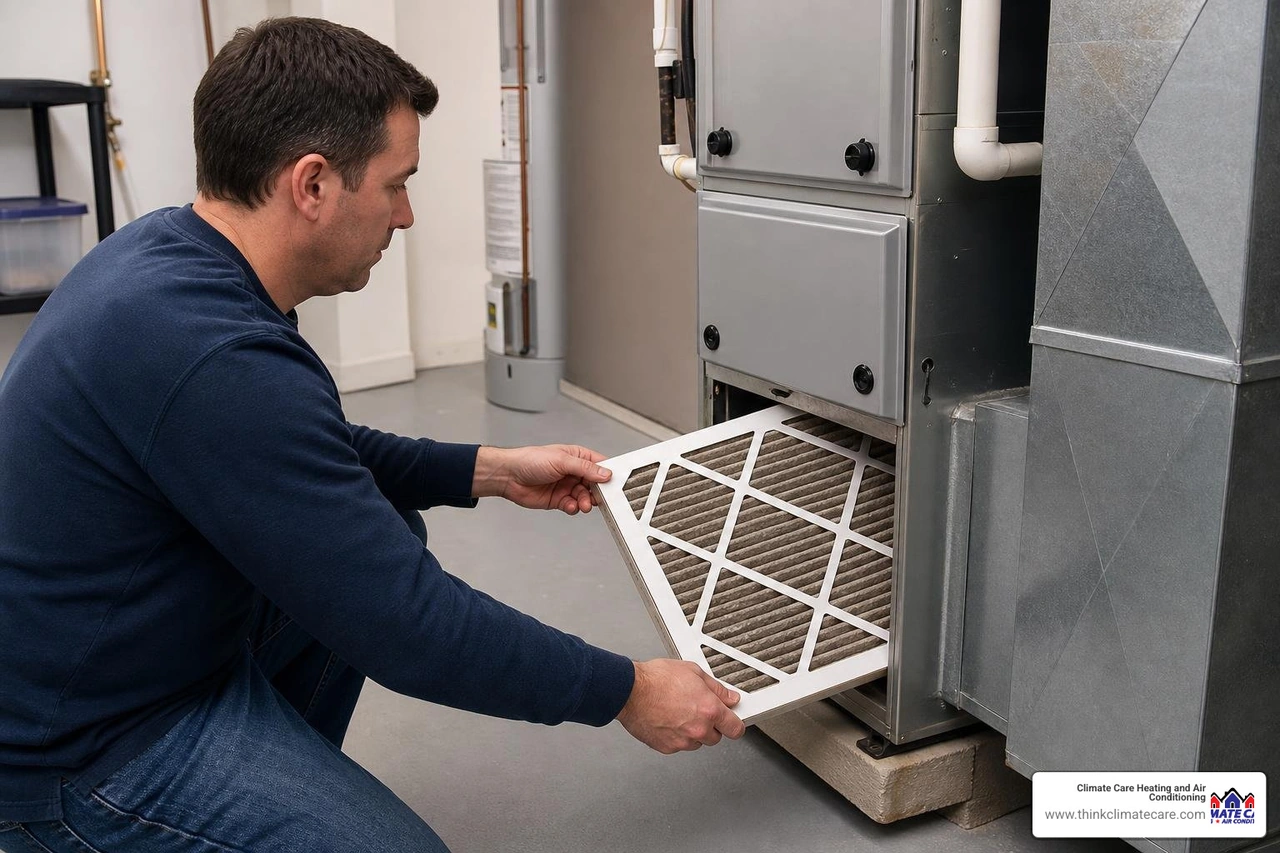
Why Knowing When to Change Your HVAC Air Filter Can Save You Money and Headaches
Knowing when to change your HVAC air filter is one of the simplest things you can do to protect your system and keep your home comfortable — especially in the Central Valley, where long, hot summers and wildfire smoke put extra strain on your equipment. Yet it's one of the most overlooked maintenance tasks homeowners face.
Here's a quick answer based on filter type:
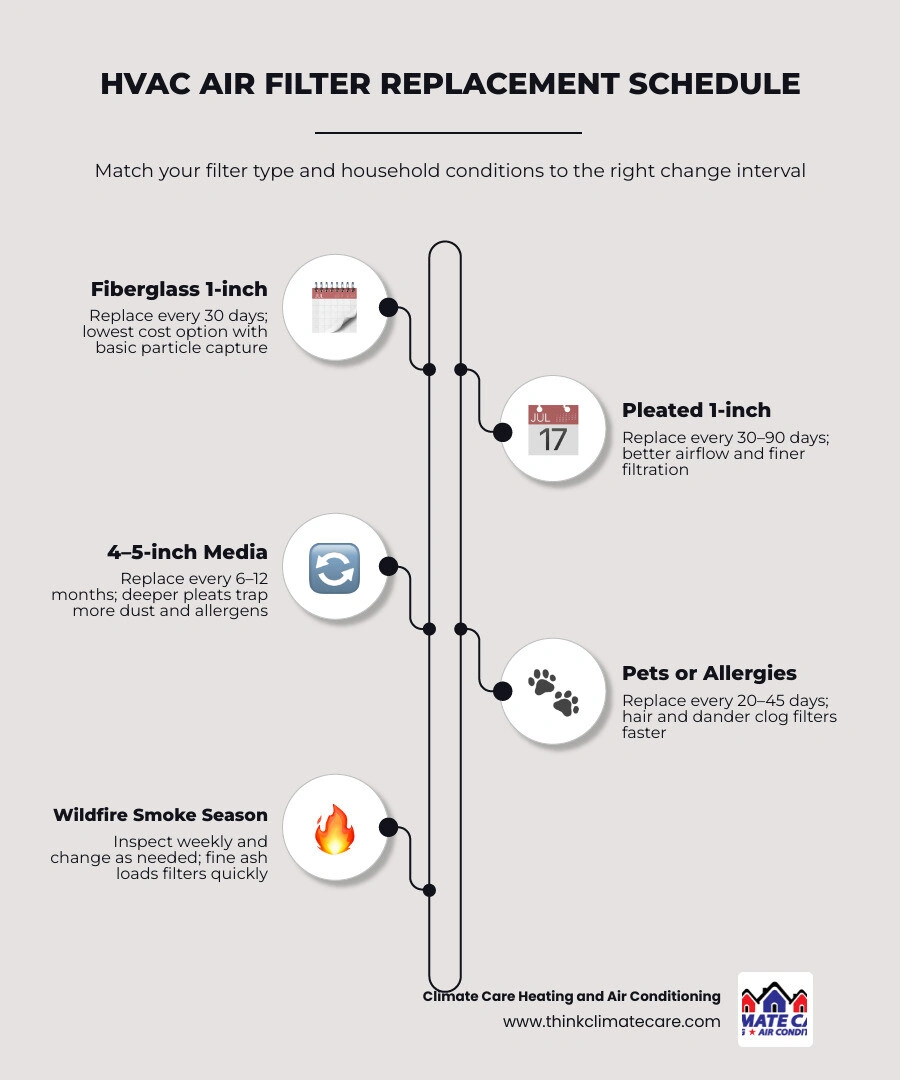
• 1-inch fiberglass — Recommended Change Interval: Every 30 days
• 1-inch pleated — Recommended Change Interval: Every 30–90 days
• 4–5-inch media filter — Recommended Change Interval: Every 6–12 months
• Homes with pets or allergies — Recommended Change Interval: Every 20–45 days
• Vacation/rarely used homes — Recommended Change Interval: Up to 6 months
Most homes do well checking their filter monthly and replacing it at least every 90 days. But if you have pets, allergy sufferers, or you're running your AC hard through a Manteca summer, you'll likely need to swap it out more often.
A clogged filter doesn't just hurt your air quality — it forces your system to work harder, drives up your energy bills, and can lead to breakdowns that are entirely avoidable. According to the U.S. Department of Energy, replacing a dirty filter can improve system efficiency by 5–15%.
The good news? Once you know your household's situation, setting the right schedule takes almost no effort.
When to Change Your HVAC Air Filter: The Ultimate Guide
To truly understand how to manage your heating and cooling system, you have to look beyond a simple calendar reminder. While the "90-day rule" is a great baseline for standard homes, your actual replacement cycle depends heavily on your system's design, its MERV rating, and how much air is circulating through your home.
MERV stands for Minimum Efficiency Reporting Value, and ratings scale from 1 to 16 for residential systems. A higher MERV rating means the filter has tighter fibers designed to trap smaller particles like pet dander, mold spores, and pollen. However, because these filters trap more debris, they also restrict airflow more quickly. If you choose a high-efficiency filter without adjusting your replacement schedule, your blower motor has to work twice as hard to pull air through the system, creating a massive drop in system airflow.
Sticking to a customized replacement schedule is the single best way to protect your system's efficiency and overall health. For a comprehensive look at the mechanics behind this schedule, check out our guide on How Often Should You Change Your HVAC Air Filter.
How Filter Type Affects When to Change Your HVAC Air Filter
Different filter materials are built to handle different levels of debris, which means their lifespans vary wildly:
• Fiberglass Filters (Disposable): These are the thin, 1-inch flat filters you often buy in bulk. They are highly economical but offer minimal filtration—some technicians jokingly say they are only good for stopping "dogs, cats, and beer cans." Because they have very little surface area, they clog incredibly fast and must be changed every 30 days or less.
• Pleated Filters (Disposable): Made of folded paper or synthetic fibers, pleated filters have up to three times more surface area than flat filters. This extra space allows them to trap smaller allergens without immediately choking your airflow. These typically last between 30 and 90 days, depending on usage.
• Media Filters (Deep Pleated): Usually measuring 4 to 5 inches in thickness, these heavy-duty filters are installed in a dedicated cabinet. Thanks to their massive surface area, they can last anywhere from 6 to 12 months.
• HEPA Filters: These provide clinical-grade filtration but are extremely restrictive. Most standard residential HVAC systems in our region cannot handle true HEPA filters without custom modifications, as they can cause severe airflow issues.
If you live in the capital region and want to dive deeper into selecting the right filter depth and material for your specific setup, check out our Air Filter Replacement Sacramento Guide.
Household Factors That Influence When to Change Your HVAC Air Filter
No two homes in the Central Valley are identical, and your lifestyle plays a massive role in how quickly your air filter loads up with debris. Here are the main factors that will shift your replacement schedule:
• Pet Dander: If you share your home with a golden retriever or a long-haired cat, your pets act like little dust and dander factories. Pet hair and dander will clog a standard 1-inch filter in as little as 30 days.
• Allergy and Asthma Sufferers: For sensitive individuals, changing the filter is a health priority. We recommend upgrading to a MERV 11 or MERV 13 pleated filter and changing it every 30 to 45 days to keep indoor air clean.
• Home Size: Interestingly, smaller homes often require more frequent filter changes. Because there is less total volume of air, dust and pet dander concentrate more quickly, loading up the smaller air filters typical of compact systems.
• Occupancy Levels: A bustling household of five generates significantly more dust, skin cells, and lint than a quiet home with one or two residents.
• Wildfire Smoke: During late summer and autumn in the Sacramento and San Joaquin valleys, wildfire smoke can drastically compromise outdoor air quality. When smoke is present, your HVAC system recirculates fine particulate matter, meaning you should check your filter weekly and replace it immediately after a major smoke event.
For homeowners in neighboring communities managing these local environmental factors, you can find tailored advice in our HVAC Maintenance Tracy CA Complete Guide and our HVAC Maintenance Stockton CA Guide.
Warning Signs Your Filter Needs Immediate Replacement
You don't always have to wait for a calendar alert to know when to change your HVAC air filter. Your home and your system will start dropping hints when the filter is full:
1. The Light Test: This is the most reliable DIY test. Slide your filter out and hold it up to a bright light source or the sun. If light cannot easily pass through the fabric because it is matted with a gray, fuzzy layer of dust, it is completely clogged and needs to be replaced.
2. Dusty Supply Vents: If you notice a buildup of fine gray dust on your ceiling vents or find yourself dusting your living room furniture every couple of days, your filter is likely saturated and letting bypass air slip through.
3. Musty Odors: When air filters get damp from condensation and are left in place, they can become breeding grounds for mold. If you smell a dusty, damp, or musty odor when your system kicks on, change the filter immediately.
4. Longer Run Times: If your air conditioner or furnace seems to run continuously without ever quite reaching your thermostat's set temperature, restricted airflow is likely the culprit.
Ignoring these warning signs can seriously degrade your comfort. Learn more about how this impacts your comfort and utility costs by reading about the Impact of Dirty Filters on AC Performance.
The Consequences of Neglecting Your HVAC Filter
What actually happens if you simply forget about your air filter? A clogged filter is the primary cause of preventable HVAC system failures.
When airflow is restricted, your air conditioner's evaporator coil doesn't get enough warm indoor air passing over it. As a result, the condensation on the coil can quickly freeze, turning your indoor unit into a solid block of ice and potentially liquid-locking your expensive compressor. Additionally, the lack of airflow causes the blower motor to pull more electrical current, leading to overheating, short cycling, and premature blower motor failure.
To avoid these costly headaches, it helps to understand What Happens When You Don't Change Your HVAC Air Filters. Taking a proactive approach to filter care is the cornerstone of Preventive AC Maintenance: How It Can Help Avoid Costly Repairs.
Step-by-Step Guide to Replacing Your Filter
Changing your filter is a quick, 5-minute task that anyone can complete. Follow these steps to ensure a safe and proper replacement:
1. Power Down: Always turn your HVAC system off at the thermostat before removing the filter. This prevents the fan from kicking on while the filter is out, which could suck loose dust and debris directly into the unprotected blower motor.
2. Check the Airflow Arrow: Look closely at the edge of your new filter. You will see a printed arrow indicating the direction of airflow. This arrow must point toward the furnace or blower unit, not away from it. Installing a filter backward reduces its efficiency and can crush the media.
3. Verify the Size: Always use the exact nominal size printed on your filter frame (such as 20x25x1). If there are gaps around the frame, air will bypass the filter entirely, rendering it useless.
4. Clean the Slot: Wipe down the filter slot with a damp rag to remove any residual dust before sliding the new filter in.
5. Track the Date: Use a permanent marker to write the installation date directly on the cardboard frame of the new filter so you never have to guess how long it has been in place.
For more local homeowner tips on keeping your system running smoothly, check out our HVAC Maintenance Manteca Guide.
Conclusion: Keep Your Central Valley Home Comfortable Year-Round
At Climate Care Heating and Air Conditioning, we believe in holistic HVAC care. Our goal is to help you maximize your home's comfort, protect your system's lifespan, and keep your monthly energy bills as low as possible. Managing your air filter is the easiest way to take control of your indoor climate, but it is only one part of keeping your heating and cooling equipment in peak condition.
If you want to take the guesswork out of system maintenance entirely, consider our comprehensive membership plan, which includes regular professional tune-ups, priority service, and significant long-term savings. You can explore whether this option is right for your home in our guide: Is an HVAC Maintenance Plan Worth It.
Ready to ensure your system is fully prepared for the upcoming season? Schedule Professional HVAC Maintenance in Manteca, CA with our friendly, licensed technicians today!