Why Summer Energy Bills Are So High — And What You Can Do About It
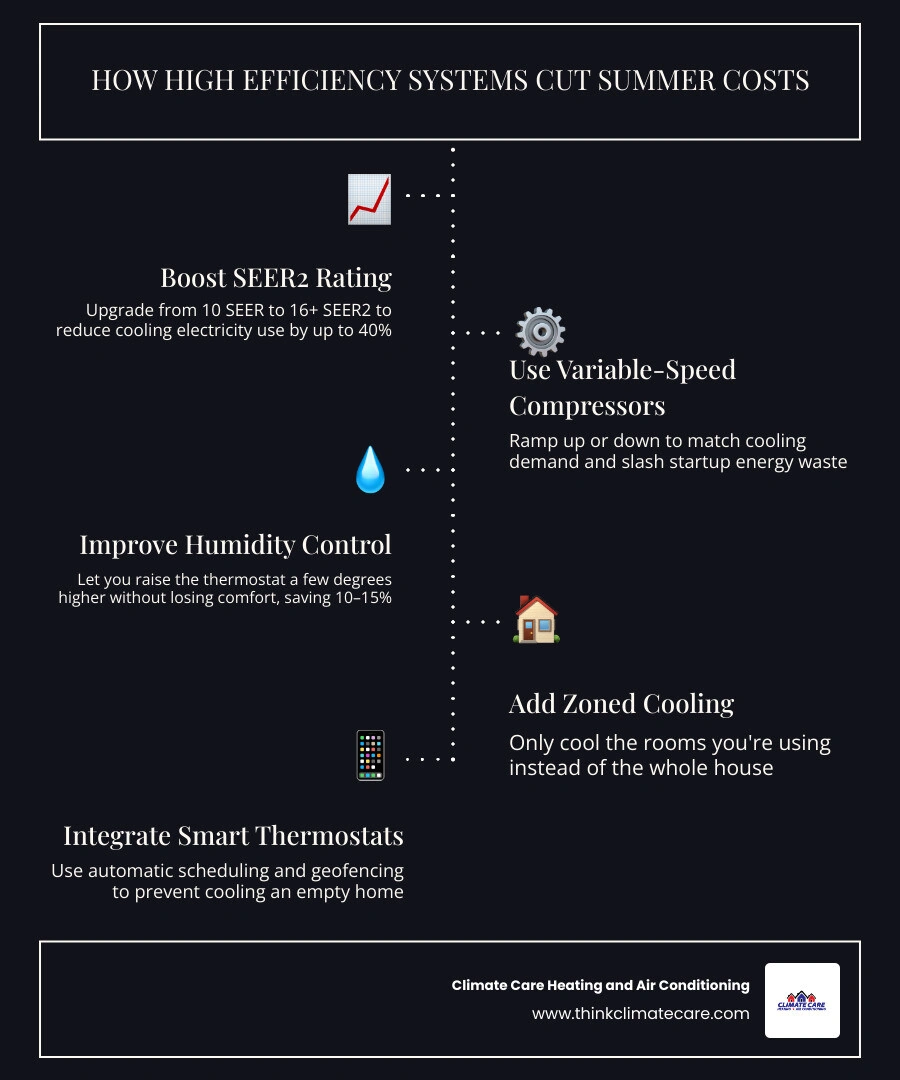
How high efficiency systems reduce summer costs comes down to one core idea: they deliver the same cooling comfort your home needs while using significantly less electricity to do it. Here's a quick breakdown of how they work and what you can realistically save:
How High Efficiency Systems Cut Summer Cooling Costs:
• Higher SEER2 ratings — Upgrading from a 10 SEER unit to a 16+ SEER2 system can reduce cooling-related electricity use by up to 40%
• Variable-speed compressors — Instead of blasting on and off, they ramp up and down to match demand, slashing startup energy waste
• Better humidity control — Improved dehumidification lets you keep the thermostat a few degrees higher without feeling less comfortable, saving 10–15% per degree raised
• Zoned cooling — Only condition the rooms you're actually using, not the whole house
• Smart thermostat integration — Automatic scheduling and geofencing prevent cooling an empty home
If you live in the Central Valley — Manteca, Modesto, Stockton, or Sacramento — you already know how brutal summer gets. From June through September, air conditioning doesn't just run in the background. It becomes the single largest draw on your home's energy, accounting for anywhere from 40% to 70% of your monthly electricity bill during peak months. That's not a small line item. For many households, it's the biggest one.
And the strain isn't only on your wallet. During summer heat waves, the regional energy grid is pushed to its limits, and older, inefficient systems work harder than they should — driving up your bill while wearing themselves out faster.
The good news is that upgrading to a high-efficiency HVAC system is one of the most effective moves a Manteca homeowner can make to take back control of those summer costs — and the savings start from the very first month.
How High Efficiency Systems Reduce Summer Costs in the Central Valley

When homeowners ask us why one AC system seems to sip electricity while another gulps it, the answer is usually efficiency plus control. A high-efficiency system is built to produce the same cooling with less wasted energy, less short cycling, and better airflow management.
That matters a lot in Manteca, Modesto, Stockton, and Sacramento, where systems may run for long stretches during triple-digit weather.
A few core features make the difference:
• Higher SEER2 ratings, which indicate better seasonal cooling efficiency
• Variable-speed or inverter-driven compressors that avoid energy-hungry on/off spikes
• Better indoor fan control for more even temperatures
• Improved moisture removal, so the house feels comfortable without overcooling
• Better compatibility with zoning and smart thermostat controls
If you want a deeper look at the basics, our guides on HVAC system efficiency and what no one tells you about your HVAC unit's SEER explain the ratings and real-world performance in plain English.
Here is the simple version:
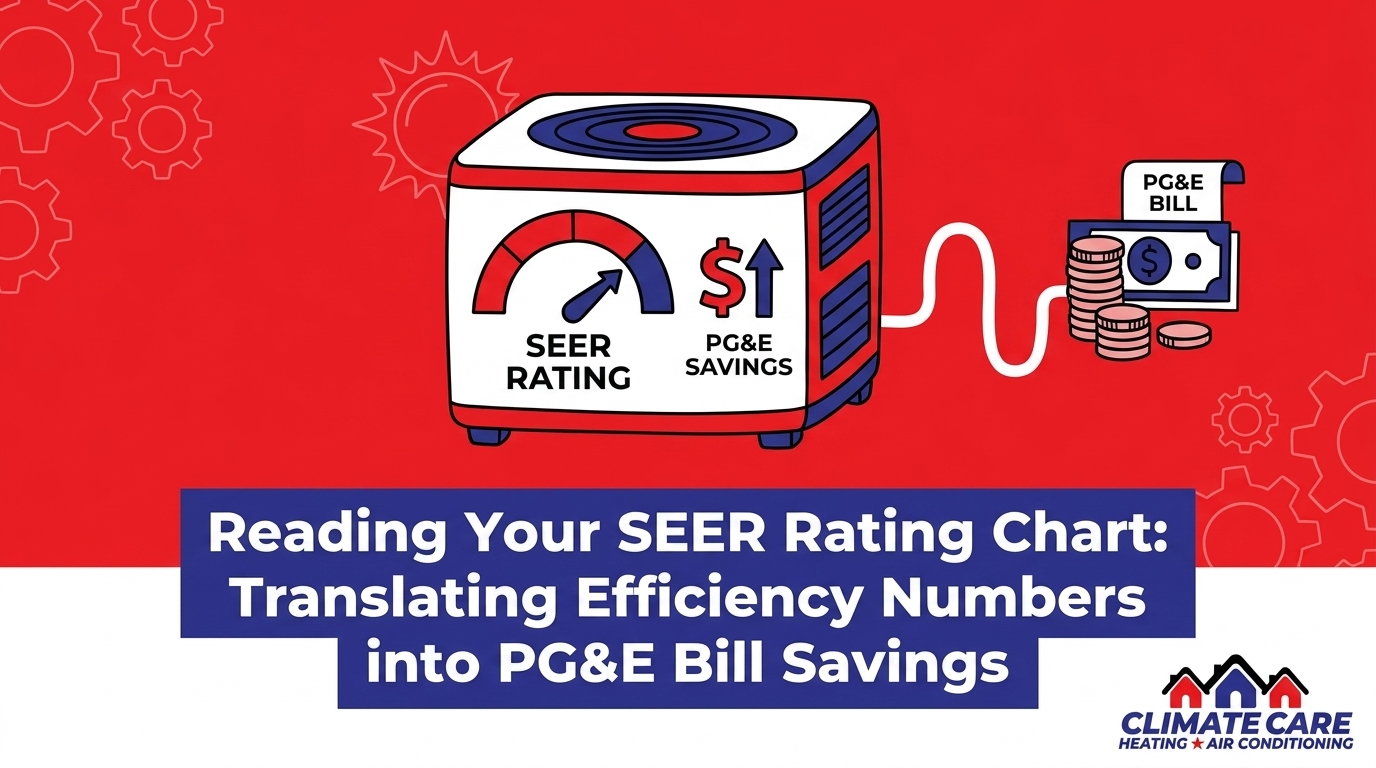
• 13-14 SEER2 — What it generally means: Current lower-end efficiency — Likely summer impact: Meets minimum standards, but not ideal for long hot summers
• 15-16 SEER2 — What it generally means: Solid efficiency upgrade — Likely summer impact: Noticeably lower cooling use versus older systems
• 17-20+ SEER2 — What it generally means: High-efficiency performance — Likely summer impact: Best potential for major summer savings, especially replacing older 10 SEER equipment
For many homeowners replacing older equipment, moving from 10 SEER to 15 SEER can reduce cooling costs by about 33% annually, while moving to 18 SEER can save 40% or more. That is the heart of how high efficiency systems reduce summer costs: less electricity used per hour, fewer wasteful startup surges, and more comfort from every cycle.
How high efficiency systems reduce summer costs: What should I look for in a Modesto AC replacement?
If you are planning an AC replacement in Modesto, we recommend focusing on performance instead of sticker hype. Bigger is not always better, and the highest advertised efficiency will not help much if the system is poorly matched to the home.
What should you look for?
• SEER2 ratings of 16 or higher for strong summer efficiency
• ENERGY STAR certified equipment when available
• Variable-speed compressor technology
• Two-stage or variable-speed indoor blowers
• Strong humidity control performance
• Proper sizing based on load calculations, not guesswork
• Ductwork inspection before installation
For homeowners with older systems, a modern 16+ SEER2 unit can reduce cooling-related electricity consumption by up to 40%. That is especially important if your current equipment is more than 10 to 15 years old or still operating at 10 SEER or similar efficiency.
Humidity control also deserves more attention than it gets. When a system removes moisture effectively, the air feels cooler at a slightly higher thermostat setting. That means you may be comfortable at 78 instead of 75, and each degree above 75 can reduce cooling energy use by roughly 10% to 15% according to the research provided. Your thermostat should not become a panic button.
You can also review 5 signs your HVAC system is energy efficient if you are trying to decide whether your current setup is still pulling its weight.
How high efficiency systems reduce summer costs through advanced heat pump technology in Stockton
For many Stockton homeowners, heat pumps are now one of the smartest ways to improve both cooling and year-round efficiency. In summer, a high-efficiency heat pump works much like an AC, but modern models use advanced compressor technology to modulate output instead of constantly cycling at full blast.
That delivers three big benefits:
• Lower electricity use during long hot afternoons
• Better temperature consistency from room to room
• Better humidity management and comfort
Ductless mini-splits are also worth serious consideration for additions, converted garages, problem rooms, and homes where zoning matters. A small to mid-sized ductless mini-split system typically uses about 500 to 800 watts per hour, and one of its biggest advantages is that you only cool the rooms you are actually using.
That room-by-room approach can make a major difference. Research shows that cooling a 500 to 700 square foot area with a few standard window units can add much more to a monthly bill than using a highly efficient SEER 17 mini-split in the same space. Another bonus: central duct systems can lose up to 30% of cooling energy through leaky ductwork, while ductless systems avoid that issue entirely.
For hot inland climates like ours, heat pumps can absolutely be an efficient option. Our article on whether heat pumps are efficient in hot dry climates covers that in more detail.
Maximizing performance with smart thermostats and professional maintenance
Even the best equipment cannot save as much as it should if it is neglected or controlled poorly. This is where homeowners can stack savings.
Start with thermostat settings. A common rule of thumb is 78 degrees when you are home and higher when you are away, then use fans to stay comfortable. Fans use only a tiny fraction of the energy an AC uses, and ceiling fans can reduce air conditioning demand enough to save up to 40% on electricity in some situations. Just remember: fans cool people, not empty rooms, so switch them off when you leave.
Smart thermostats add another layer of control by helping you:
• Schedule cooling around your routine
• Use setbacks automatically when nobody is home
• Take advantage of geofencing
• Avoid overcooling during the hottest and most expensive hours
Many homeowners save around $100 per year with smart thermostat use alone, and the real value is consistency. You are less likely to come home to an icebox or accidentally cool an empty house all afternoon.
Maintenance matters just as much. A clogged filter can increase energy use fast. Simply cleaning or replacing a dirty filter can cut energy consumption by 5% to 15%. That is one of the cheapest wins in home comfort. Regular tune-ups also help protect efficiency by checking airflow, refrigerant charge, electrical components, and coil condition.
Here are practical ways to lower summer cooling costs besides upgrading your system:
• Replace or clean filters regularly
• Keep the outdoor unit clear of debris
• Seal air leaks around windows and doors
• Close blinds during peak afternoon sun
• Use bathroom and kitchen exhaust fans to remove heat and humidity
• Plant shade trees or shrubs on the south and west sides of the home, which can improve cooling efficiency by up to 10%
• Consider whole house fan energy savings where appropriate
• Review more everyday tips in Slash Your Energy Bills: 5 Easy HVAC Cost-Saving Tips for Homeowners
As for payback period, it depends on your current system, runtime, home size, and available incentives. In many homes, high-efficiency HVAC upgrades pay for themselves through energy savings over roughly 5 to 12 years. If your old system is especially inefficient, the timeline can be shorter.
Conclusion: Securing Your Comfort with Local Rebates and Expert Care
If you have been wondering whether a high-efficiency upgrade is really worth it, the short answer is yes for many Central Valley and Sacramento-area homeowners. When cooling makes up 40% to 70% of summer electric bills, improving HVAC efficiency is one of the clearest ways to reduce waste without sacrificing comfort.
The biggest savings usually come from combining the right equipment with the right support:
• Properly sized AC installation or heat pump replacement
• Ductwork and ventilation improvements
• Smart thermostat setup
• Ongoing maintenance and tune-ups
• Fast AC repair when performance drops
• Zoned comfort options like ductless mini-splits
• Better indoor air quality and airflow management
We also encourage homeowners to look at available incentives before making a decision. Depending on the equipment, you may qualify for rebates or tax credits that lower the upfront investment. Helpful resources include California energy rebates for HVAC upgrades, federal tax credits for heat pump upgrades, and how to apply for energy rebates in California.
At Climate Care, we take a whole-system approach to comfort for homeowners in Manteca, Modesto, Stockton, Sacramento, and nearby communities. That means we do not just look at the box outside your house. We look at how your AC installation, heat pump, furnace, ductwork, ventilation, maintenance history, and indoor air quality all work together to affect comfort and efficiency.
Whether you need AC repair in Manteca, ductless mini-split service in Stockton, furnace service in Sacramento, emergency HVAC help, or a full replacement designed for lower summer energy use, we are here to help you make a smart long-term choice. To learn more or schedule service, contact Climate Care for expert HVAC solutions.