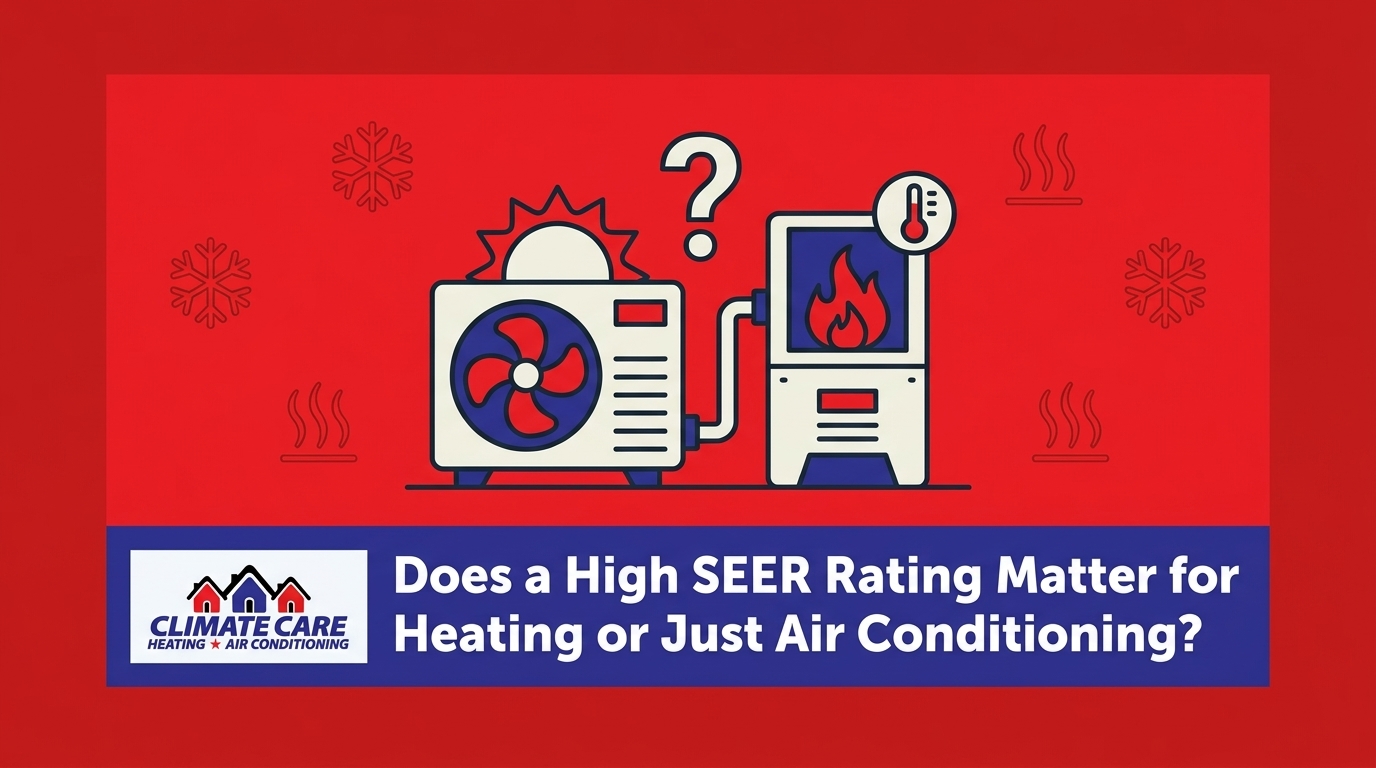
Does a High SEER Rating Matter for Heating or Just Air Conditioning?
That high SEER rating on your outdoor unit only measures summer cooling efficiency. Discover which HVAC ratings actually impact your winter heating performance.
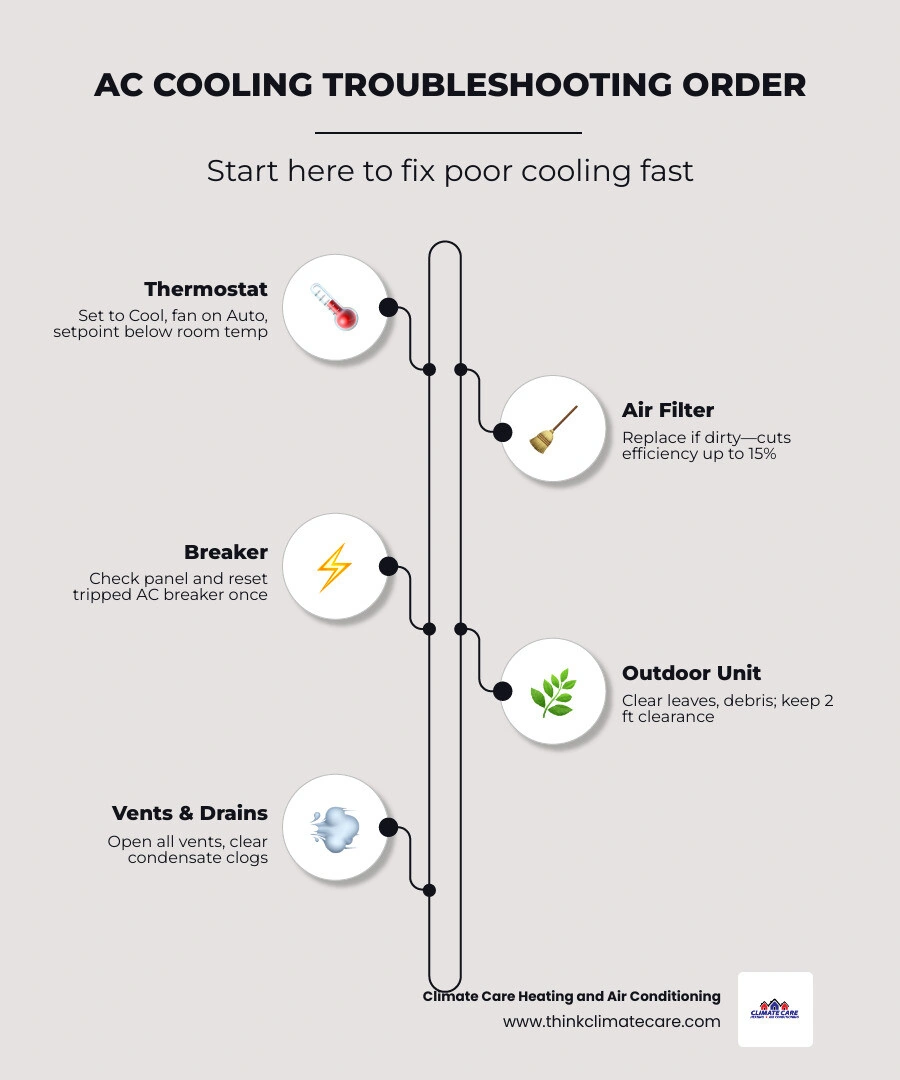
If you're dealing with ac not cooling properly what to check, here's a quick-reference list of the most important things to inspect first:
1. Thermostat - Make sure it's set to "Cool" mode with the fan on "Auto" and the setpoint below current room temperature
2. Air filter - A clogged filter is the #1 cause of poor cooling and can cut efficiency by up to 15%
3. Circuit breaker - Check your electrical panel for a tripped AC breaker and reset it once
4. Outdoor condenser unit - Clear away leaves, grass, and debris; make sure nothing is blocking airflow
5. Supply and return vents - Confirm all vents are open and unobstructed throughout the home
6. Refrigerant lines - Look for ice buildup, oily residue, or listen for hissing sounds near the unit
7. Condensate drain - Check for standing water or clogs that may have triggered a safety shutoff
We've all been there. It's a sweltering Central Valley afternoon in Manteca, Modesto, Stockton, or Sacramento, and your AC is running — but the house just won't cool down. The fan is blowing, the system sounds normal, and yet the air coming out of the vents is barely cool. It's frustrating, and it can feel like something expensive is about to go wrong.
The good news? Most AC cooling problems come down to a short list of common, fixable issues. Research shows that three basic checks — the air filter, thermostat settings, and the outdoor unit — resolve the problem the majority of the time. Some fixes take less than 15 minutes and cost nothing at all.
This guide walks you through exactly what to inspect, in the right order, so you can either fix the problem yourself or give your HVAC technician a clear picture of what's going on before they arrive.
Start simple before assuming the worst.
First, check the thermostat:
• Set it to Cool
• Set the fan to Auto, not On
• Lower the temperature at least a few degrees below the current room temperature
• Replace batteries if the screen is blank, dim, or acting strangely
That fan setting matters more than many homeowners realize. When the fan is left on On, it can keep circulating air between cooling cycles, which makes the air feel warmer than it should.
Next, check the breaker panel:
• Look for a tripped AC breaker
• Reset it once by turning it fully off, then back on
• If it trips again, stop there and call for service
Then walk through the house:
• Open all supply vents
• Make sure furniture, rugs, or curtains are not blocking airflow
• Check return vents too, because a blocked return can choke the whole system
On a properly working system, supply air is usually noticeably cooler than room air. If your home still feels muggy, remember your AC is removing heat and humidity, not just "making cold."
Yes, in many cases.
We recommend turning the system off if you notice:
• Ice on the refrigerant line or indoor coil
• A burning smell
• Water leaking around the indoor unit
• Loud buzzing or grinding
• A breaker that keeps tripping
• Short cycling, where the system starts and stops every few minutes
If the coil is frozen, keep the cooling off and switch the fan to On to help thaw it. Running an AC that is not cooling can strain the compressor, and that is not a gamble worth taking in the middle of a Central Valley heat wave.
Most "running but not cooling" calls come back to airflow, heat transfer, refrigerant, or electrical issues. The checklist below moves from DIY-safe items to problems that usually need a technician.
• Thermostat problem — What you can check safely: Mode, setpoint, batteries, schedule — Usually needs a technician: Calibration or wiring faults
• Dirty air filter — What you can check safely: Inspect and replace — Usually needs a technician: Airflow diagnostics if problem continues
• Blocked outdoor unit — What you can check safely: Clear debris, rinse coils lightly — Usually needs a technician: Fan motor or capacitor repair
• Frozen coil — What you can check safely: Turn system off, let it thaw — Usually needs a technician: Cause diagnosis, coil service
• Refrigerant leak — What you can check safely: Look for ice, hissing, oily spots — Usually needs a technician: Leak repair and refrigerant charging
• Duct problems — What you can check safely: Check visible vents and attic access areas — Usually needs a technician: Duct sealing, testing, balancing
• Electrical issue — What you can check safely: Check breaker once — Usually needs a technician: Capacitor, contactor, motor, wiring repair
If you're searching ac not cooling properly what to check, this is the best place to begin.
A dirty air filter is the most common cause of poor cooling. It restricts airflow, makes the blower work harder, and can reduce system efficiency by up to 15%. Worse, it can cause the evaporator coil to freeze.
Replace filters every 30 to 90 days depending on:
• Filter type
• Pets in the home
• Dust levels
• Allergy needs
• How heavily the AC runs during summer in Manteca, Modesto, Stockton, and Sacramento
A quick rule: if light barely passes through the filter, it's time.
Also check:
• Closed or blocked supply registers
• Blocked return grilles
• Rooms with weak airflow
• Furniture placed over vents
If one part of the house is hot and another is cool, airflow restrictions may be the problem rather than the thermostat itself.
For more on filter-related issues, see how dirty filters affect AC performance.
Your outdoor unit has one main job: dump indoor heat outside. If it cannot breathe, your house cannot cool.
Check for:
• Leaves
• Grass clippings
• Cottonwood fluff
• Dirt on the coil surface
• Shrubs or fencing too close to the unit
Keep about 2 feet of clearance around the condenser.
To clean it safely:
1. Turn off power at the thermostat and disconnect if accessible
2. Remove loose debris by hand
3. Gently rinse the coil with a garden hose using low pressure
4. Never use a pressure washer, which can bend fins
5. Make sure the top fan area is clear
If the outdoor fan is not spinning or the unit hums but does not seem to move heat, stop troubleshooting and call us. That can point to a bad capacitor, motor issue, or another electrical problem.
You can also read more about why your AC is not cooling properly.
A frozen evaporator coil is a common reason an AC runs but does not cool.
Signs of a frozen coil include:
• Weak airflow from vents
• Ice on the refrigerant line
• Water around the indoor unit after thawing
• The system runs constantly but cools poorly
What should you do?
• Turn cooling off
• Turn the fan on
• Replace the air filter if dirty
• Wait for the ice to melt completely before restarting
Frozen coils are usually caused by restricted airflow or low refrigerant.
Low refrigerant is different from "normal use." AC refrigerant runs in a closed loop, so if levels are low, there is usually a leak.
Possible signs of a refrigerant leak:
• Hissing or bubbling sounds
• Ice on the lines or outdoor unit
• Oily residue near refrigerant connections
• Warm air or air that is cool but not cold
• Rising indoor humidity
If you see these signs, don't keep resetting the system and hoping for a miracle. Hope is not a refrigerant.
For related reading, visit why your AC unit freezes up and AC blowing hot air.
If the basics look fine, start checking the less obvious issues.
Blocked or leaking ductwork can rob your home of cooling. Research shows typical homes lose 20% to 30% of conditioned air through duct leaks. In practical terms, that can mean your AC is cooling the attic, crawlspace, or wall cavities more than your living room.
Check for:
• Closed vents
• Crushed flexible ducts in accessible areas
• Disconnected ducts in attic spaces
• Hot rooms with very weak airflow
Electrical faults can let the system run partly, but not properly cool.
Common examples include:
• Tripped breaker
• Failing capacitor
• Bad contactor
• Indoor blower motor problem
• Outdoor fan motor failure
Warning signs:
• Clicking or buzzing
• Fan not spinning
• AC starts, then shuts off quickly
• Breaker keeps tripping
If your breaker trips again after one reset, stop. Repeated trips usually mean an electrical fault, not bad luck. For more, see AC circuit breaker keeps tripping.
A clogged condensate drain can trigger a float switch that shuts cooling down to prevent water damage. Look for:
• Standing water near the indoor unit
• A full drain pan
• Musty smells
• AC that will not cool even though the thermostat is calling
Most central AC systems last about 10 to 15 years with proper maintenance. After that, efficiency drops and cooling problems become more common. If your system is older and struggles every summer, it may need more than another reset.
Common signs your AC needs repair include:
• Warm air from vents
• Weak airflow
• Frequent cycling
• Ice buildup
• Water leaks
• Strange noises
• Higher energy use with less comfort
For more detail, visit signs your AC needs repair.
Some problems are safe to inspect. Others are your AC's way of saying, "Please stop poking around and call a pro."
We recommend scheduling AC repair if:
• The system still is not cooling after basic checks
• Ice comes back after thawing
• You suspect a refrigerant leak
• The breaker trips repeatedly
• The outdoor unit hums but will not start
• You hear grinding, buzzing, or hissing
• The blower or condenser fan is not working
• Cooling is uneven and duct issues are suspected
• Your system is 10 to 15 years old and struggling regularly
At Climate Care, we help homeowners across Manteca, Modesto, Stockton, Sacramento, and surrounding Central Valley communities solve cooling problems with a full-system approach. That means we do not just look for the obvious issue. We check performance, airflow, efficiency, duct conditions, electrical components, and long-term reliability.
If your DIY checks have not brought the cool air back, explore our resources on AC not cooling, 10 indicators you need professional AC repair, preventive AC maintenance, and the AC maintenance ultimate guide.
When you are ready for expert help, schedule AC repair.
Annual maintenance is still one of the best ways to prevent surprise cooling failures. Regular tune-ups help catch dirty coils, weak capacitors, airflow issues, and wear before they leave you sweating through dinner. Our maintenance and membership options are designed to support better performance, energy efficiency, priority service, and fewer mid-season surprises.
If your AC is running but not cooling, start with the easy checks above. And if the problem goes beyond a dirty filter or blocked condenser, we're here to help restore comfort throughout the Central Valley and Sacramento region.
Our customers love our service and support.

Had Climate Care inspect our HVAC before summer. Christopher Hayes was polite, knowledgeable, and efficient. Great service from the office team—highly recommend!
Alex Corona did a thorough furnace check-up today, showing before-and-after photos and answering all my questions. I’m happy with his work and highly recommend him. Great job—happy customer!
Alan C. serviced my furnace today and gave me a courtesy call before arriving. He was very professional, provided great service, and shared lots of pictures. Definitely a five-star experience—I’ll use them again!
On 02/19/2025, Alan inspected my furnace and did a great job explaining everything. He was professional, hardworking, and focused on customer satisfaction. Highly recommend requesting him!