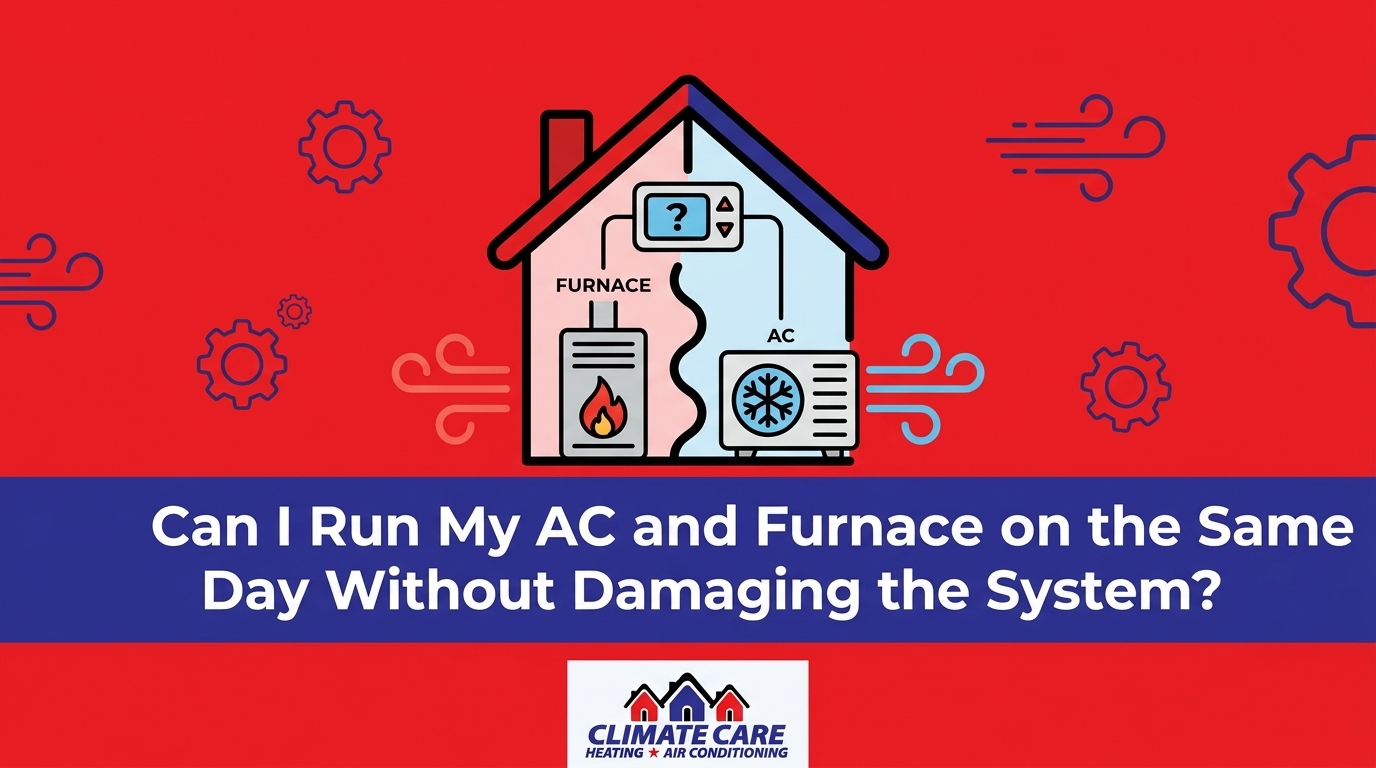
Can I Run My AC and Furnace on the Same Day Without Damaging the System?
Freezing fall mornings and sweltering afternoons can make you hesitant to switch your thermostat. Uncover the built-in safeguards that let you transition safely.
When making a central ac vs ductless mini split comparison for your Manteca home, the single most important question is simple: does your home already have ductwork, and how well is it working?
Here's a quick breakdown to help you decide:
• Best for — Central AC: Homes with existing ductwork — Ductless Mini Split: Homes without ducts, additions, problem rooms
• Efficiency (SEER2) — Central AC: Up to 21-24 SEER2 — Ductless Mini Split: Up to 38+ SEER2
• Duct energy loss — Central AC: 25-30% of cooling energy — Ductless Mini Split: None
• Zoning — Central AC: Single thermostat (whole home) — Ductless Mini Split: Room-by-room control
• Installation disruption — Central AC: High if new ducts needed — Ductless Mini Split: Minimal (small wall penetration)
• Heating capability — Central AC: Paired with furnace or heat pump — Ductless Mini Split: Built-in heat pump standard
• Filter type — Central AC: Replaceable MERV-rated filters — Ductless Mini Split: Washable mesh filters
• Typical lifespan — Central AC: 15-20 years — Ductless Mini Split: 15-20 years (up to 30 with care)
Central Valley summers are no joke. In Manteca, Modesto, and Stockton, temperatures routinely push past 100°F — and the air conditioning system you choose has a direct impact on both your comfort and your monthly utility bill. Yet most homeowners face this decision without a clear picture of what each system actually delivers in the real world.
Central air conditioning has been the standard for decades. It's familiar, it works well in homes with solid ductwork, and most HVAC contractors can service it. Ductless mini splits, on the other hand, have surged in popularity because they skip the ducts entirely — and ducts, as the U.S. Department of Energy has noted, can waste 25 to 30 percent of cooling energy through leaks and poor insulation alone.
Neither system is universally better. The right answer depends on your home's layout, your existing infrastructure, your comfort goals, and how you use different spaces throughout the day. This guide breaks down every major factor so you can make a confident, informed decision.

To understand which option fits your lifestyle, it helps to look at how these systems handle home climate control. While both systems rely on an outdoor compressor to release heat and condition refrigerant, their indoor mechanics and air distribution methods are entirely different.
Traditional central air conditioning relies on a single, centralized indoor evaporator coil (typically located in a closet, attic, or garage) and a heavy-duty air handler. This system forces cooled air through a network of metallic or flexible ducts installed behind your walls, ceilings, or floors, releasing air through registers in each room. A single central thermostat controls the temperature for the entire house.
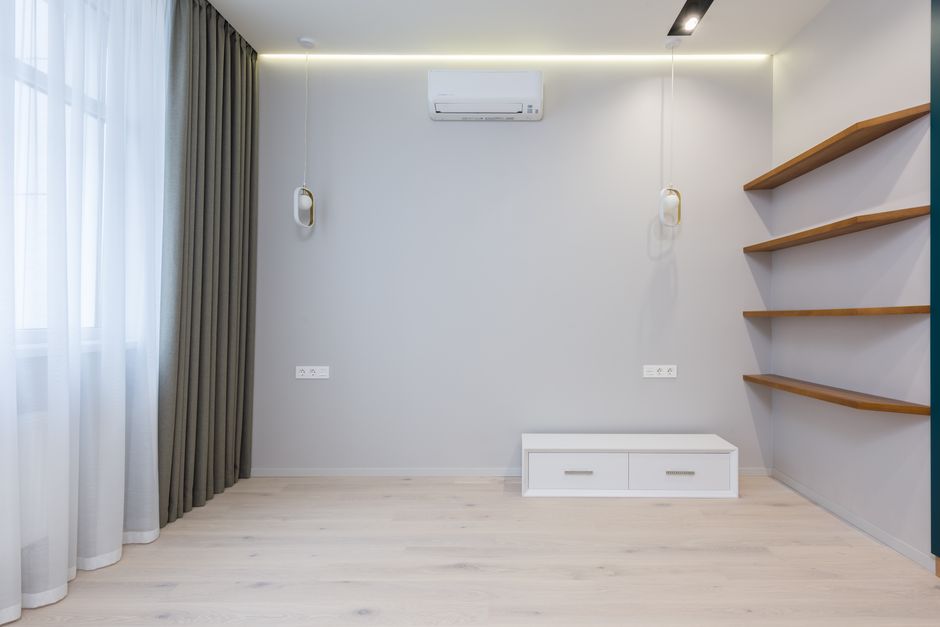
A ductless mini split system, by contrast, completely bypasses the need for ducts. Instead of one massive indoor unit, a mini split connects an outdoor compressor directly to individual indoor air handlers (often called "heads") mounted on the walls or ceilings of specific rooms. These indoor units are connected to the outdoor compressor via slim copper refrigerant lines, electrical cables, and a condensate drain line, all routed through a small three-inch hole in your exterior wall. Each indoor head operates independently, allowing you to customize the temperature room by room.
The presence and condition of ductwork in your home is often the ultimate deciding factor. If your home already has a fully functional duct network in good condition, replacing an old unit with a new central air system is often the most straightforward path. However, if your existing ducts are aging, poorly sealed, or deteriorating, they can severely degrade your system's performance.
According to the U.S. Department of Energy, typical duct systems lose up to 30% of their cooling energy through leaks, poor insulation, or gaps. This means that even if you purchase a highly efficient central AC unit, leaky ducts can make it perform far below its rated capacity, leading to frequent cycles and a need for professional AC Installation and Replacement.
For older homes in historic areas of Sacramento or Stockton that were built without ductwork, installing a central system from scratch can be incredibly invasive. It requires cutting into plaster walls, lowering ceilings, and sacrificing precious closet space to run bulky ducts. In these scenarios, or when you are building home additions like a sunroom or a converted garage, a ductless mini split is the superior choice. It allows you to avoid the extensive construction, mess, and high labor costs associated with retrofitting new ducts. If you are planning an upgrade, checking out our Complete AC Installation Guide can help you understand the scope of work involved. If you run into issues with your current setup, scheduling timely AC repair in Manteca can keep your existing system running smoothly while you weigh your options.
In 2026, energy efficiency is top of mind for Central Valley homeowners, especially with summer utility rates climbing. When looking at a central ac vs ductless mini split comparison, ductless systems are the undisputed champions of raw efficiency.
Efficiency is measured by SEER2 (Seasonal Energy Efficiency Ratio 2) ratings. While high-efficiency central air conditioning systems usually top out around 21 to 24 SEER2, ductless mini split systems can reach astonishing ratings of 38+ SEER2.
This massive efficiency gap is made possible by two main factors:
1. No Duct Loss: Because mini splits deliver cooled air directly into the room, they completely eliminate the 25% to 30% energy loss associated with duct leakage.
2. Inverter Technology: Most modern mini splits utilize variable-speed inverter compressors. While standard central AC systems operate like a single-speed light switch—turning fully on or fully off—inverter compressors act like a dimmer switch. They constantly adjust their speed to match the precise cooling demand of the room, running continuously at ultra-low, highly efficient speeds rather than constantly cycling on and off.
Additionally, under the Inflation Reduction Act of 2026, choosing a highly efficient heat pump or ductless system can qualify you for substantial federal tax credits of up to $2,000, along with local utility rebates. If you want to dive deeper into how these systems perform in our local climate, read about Ductless AC in Sacramento.
One of the greatest lifestyle advantages of a ductless mini split is its built-in zoning capability. A single multi-zone outdoor compressor can connect to multiple indoor heads, allowing family members to set different temperatures in their respective rooms. If you have an upstairs bedroom that always runs hot, or a guest room that is rarely used, you can cool those specific zones without wasting energy to condition the rest of the house. Central AC systems generally cool the entire house uniformly, which can lead to temperature battles and wasted energy in unoccupied rooms.
Furthermore, most mini splits are actually air-source heat pumps. This means they provide year-round comfort by reversing their operation in the winter, pulling ambient heat from the outdoor air to warm your home efficiently. Modern cold-climate heat pumps can provide reliable, comfortable heating even when outdoor temperatures drop. While central AC systems can also be paired with heat pumps, they are more traditionally paired with a gas furnace for winter heating. If you rely on a central setup, keeping up with regular furnace service Sacramento is essential for winter safety. For those interested in ductless heating and cooling in other parts of our service area, our Modesto Ductless AC Installation Guide offers detailed localized insights.
Both systems require regular upkeep to ensure they reach their full 15-to-20-year lifespans, but the homeowner's maintenance habits will look quite different depending on the system chosen.
• Filter Maintenance — Central AC: Replace every 30-90 days — Ductless Mini Split: Wash and dry mesh filters every 2-4 weeks
• Air Filtration Level — Central AC: High (supports high-MERV whole-home filters) — Ductless Mini Split: Moderate (limited to compact, built-in filters)
• Component Cleaning — Central AC: Annual professional coil cleaning — Ductless Mini Split: Frequent indoor head casing and drain line checks
• System Redundancy — Central AC: None (if the central unit fails, the whole house loses cooling) — Ductless Mini Split: High (if one head fails, other rooms stay comfortable)
Central air systems hold a clear advantage when it comes to indoor air quality and filtration. Because they feature a powerful, high-static-pressure blower, they can easily accommodate thick, high-MERV filters that capture fine dust, pollen, pet dander, and wild-fire smoke across your entire home. Ductless mini splits utilize smaller, washable mesh filters inside each individual head. While convenient because you do not have to buy replacements, they must be rinsed and dried every few weeks to prevent dust buildup, and they do not filter out microscopic particles as effectively as a whole-home media filter.
Deciding on the perfect system for your property requires looking beyond equipment specifications. You must evaluate your home's layout, overall size, and how you use your living space.
For large, multi-story homes with open-concept floor plans and functional, existing ductwork, central air remains an incredibly practical and cost-effective whole-home solution. It keeps the air moving uniformly and keeps equipment hidden away in attics or closets. However, for historic homes, properties with flat roofs and no attic space, or homes with severe upstairs-downstairs temperature imbalances, a ductless system provides the tailored control and ease of installation that central systems simply cannot match.
You do not always have to choose just one. Many homeowners in Sacramento, Stockton, and Modesto find that a hybrid approach offers the absolute best of both worlds.
In a hybrid configuration, you keep your traditional central AC and furnace system to handle the main living areas of the home where uniform temperature is desired. Then, you install a single-zone ductless mini split to target "problem rooms" that the central system struggles to reach.
This hybrid approach is highly effective for:
• Garage Conversions: Cooling a workshop or home gym without overloading your main system.
• Home Offices: Keeping your workspace comfortable during the day without paying to cool the entire house.
• Sunrooms: Managing the intense solar heat gain from large windows independently.
• Master Suites: Enjoying cool, whisper-quiet sleeping temperatures at night while letting the rest of the house rest at a higher temperature.
The right system is the one that aligns with your home's unique layout, your long-term energy goals, and your personal comfort preferences.
At Climate Care Heating and Air Conditioning, we believe in a holistic approach to home comfort. Our team of experienced, licensed technicians serves communities across Manteca, Modesto, Stockton, and Sacramento, providing tailored recommendations based on a detailed analysis of your living space. Whether you decide on a high-efficiency central AC replacement or want to explore the zoned comfort of our Ductless Mini Split Services, we are here to ensure your system is sized correctly, installed professionally, and maintained to the highest environmental and performance standards.
Ready to transform your indoor comfort? Contact us today to schedule a comprehensive home comfort assessment and find the perfect cooling solution for your Central Valley home.
Our customers love our service and support.

Had Climate Care inspect our HVAC before summer. Christopher Hayes was polite, knowledgeable, and efficient. Great service from the office team—highly recommend!
Alex Corona did a thorough furnace check-up today, showing before-and-after photos and answering all my questions. I’m happy with his work and highly recommend him. Great job—happy customer!
Alan C. serviced my furnace today and gave me a courtesy call before arriving. He was very professional, provided great service, and shared lots of pictures. Definitely a five-star experience—I’ll use them again!
On 02/19/2025, Alan inspected my furnace and did a great job explaining everything. He was professional, hardworking, and focused on customer satisfaction. Highly recommend requesting him!