Why the Spring HVAC Transition from Heating to Cooling Matters for Manteca Homeowners
Making the spring HVAC transition from heating to cooling the right way is one of the most important things you can do for your home before Central Valley temperatures start climbing. Skip it, and you risk turning on your AC for the first time on a hot May afternoon — only to find it blowing warm air, making strange noises, or not working at all.
Here's a quick overview of what the spring HVAC transition involves:
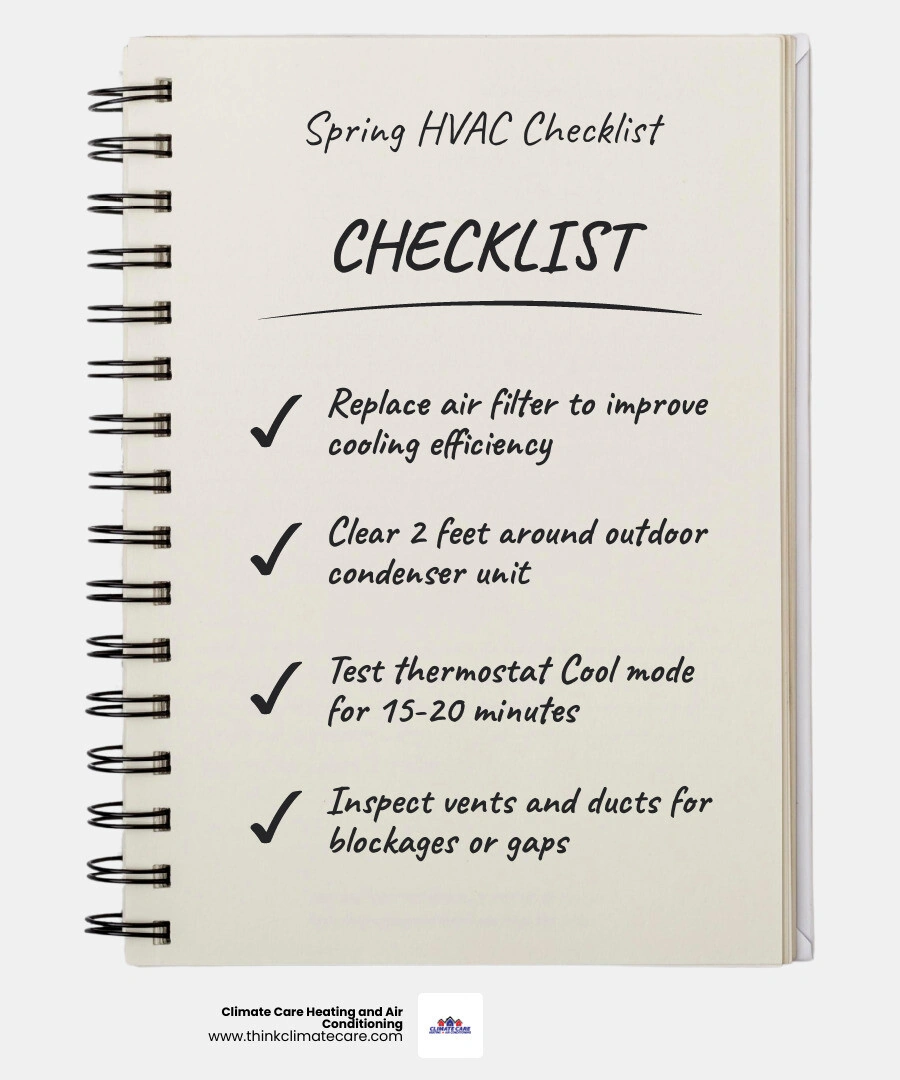
1. Replace your air filter — a clogged filter from winter heating can immediately hurt cooling performance
2. Clear the outdoor condenser unit — remove debris and ensure at least two feet of clearance on all sides
3. Switch your thermostat to Cool mode — replace batteries and update your programmed schedule
4. Run a 15-20 minute test cycle — listen for unusual noises and check that cool air is actually coming out
5. Inspect vents and ductwork — look for blockages, dust buildup, or visible gaps
6. Schedule a professional tune-up — before peak summer demand hits and appointment slots fill up
Most homeowners in Manteca, Modesto, and across the Central Valley don't think about their AC until the first real heat wave. That's exactly when systems that skipped spring maintenance start failing — and technician schedules fill up fast.
The good news: a little preparation now goes a long way. Regular HVAC maintenance can reduce energy consumption by up to 15%, and systems that get consistent care can last 15-20 years compared to just 10-12 years without it. Whether you're a DIY-minded homeowner or prefer to leave it to the pros, this guide walks you through every step.
Essential Steps for Your Spring HVAC Transition from Heating to Cooling
Transitioning your system isn't just about flipping a switch on your thermostat; it's about making sure your equipment is physically prepared to handle the intense summer workload. Think of it like a pre-trip inspection for your car before a long summer road trip. Taking a few proactive steps now will prevent minor wear and tear from turning into a major breakdown when the July heat hits.
For a complete breakdown of getting your system ready, check out our guide on Getting Your Cooling System Ready for Warm Weather. Understanding How Central Valley Climate Affects Your HVAC System is also crucial, as our hot, dusty summers put unique demands on residential systems.

Why the Spring HVAC Transition from Heating to Cooling Begins with Filter Care
If there is one DIY task you absolutely cannot skip during the spring transition, it is inspecting and replacing your air filter. During the winter heating months, your system works hard circulating warm air, trapping dust, pet dander, and soot from your furnace.
When you transition to cooling, a dirty, clogged filter will severely restrict airflow. This forces your air conditioner’s compressor to work twice as hard to cool your home, which can cause the cooling coils to freeze up and shut the entire system down.
• The Cost of Neglect: According to energy experts, running a dirty air filter can increase your system's energy use by 5% to 15%.
• The Light Test: Hold your filter up to a bright light. If the filter is gray, fuzzy, and light cannot pass through it, it is time for a replacement.
• Choosing the Right Filter: Look for a filter with a MERV rating between 8 and 11, which provides excellent allergen filtration without restricting your system’s blower capacity.
For more tips on filter selection and routine care, explore our AC Maintenance Ultimate Guide.
Preparing Your Outdoor Condenser Unit for Warm Weather
While you’ve been cozy indoors all winter, your outdoor condenser unit has been brave against the elements. Leaves, twigs, dirt, and winter debris can accumulate around and inside the unit, blocking essential airflow.
Without proper airflow, your condenser cannot release heat efficiently, which dramatically lowers its cooling capacity and spikes your utility bills.
• Clear the Area: Ensure there is at least two feet of clear space around the entire outdoor unit. Trim back any shrubs, weeds, or low-hanging tree branches that have grown close to the metal cage.
• Clean the Exterior: Gently sweep away leaves and twigs from the top and sides of the unit. You can use a low-pressure garden hose to rinse the exterior fins.
• Avoid High Pressure: Never use a pressure washer on your condenser. The high-pressure stream will easily bend the delicate aluminum fins, permanently restricting airflow and requiring professional repair.
Proactive cleaning is one of the easiest ways of Preventing AC Breakdowns During Summer.
Thermostat Settings and Testing Your Spring HVAC Transition from Heating to Cooling
When is the best time to make the official switch? A good rule of thumb for Central Valley homeowners is the 70/60 rule: make the transition when daytime highs consistently reach 70°F to 80°F, and nighttime lows stay above 60°F.
When you are ready to switch from heating to cooling, follow these steps to protect your compressor:
1. Turn the system off first. Do not flip directly from "Heat" to "Cool" while the system is running. Turn the thermostat to "Off."
2. Wait five minutes. This allows the refrigerant pressures within the system to safely equalize, preventing a "hard start" that strains the compressor.
3. Switch to "Cool" mode. Set your desired temperature about 5 degrees below the current indoor temperature.
4. Listen and observe. Let the system run for 15 to 20 minutes. Walk around your home to ensure cool air is blowing consistently from all vents. Listen for any unusual rattling, squealing, or grinding noises, and check for any strange, musty odors.
If your system struggles to reach the set temperature or makes unusual noises during this test run, it could be pointing to deeper issues. Learn more about identifying these warnings in our guide on the Signs of Failing AC System.
Addressing Indoor Air Quality and Humidity in the Central Valley
Spring in the Central Valley brings a heavy wave of pollen and dust. If your ductwork is leaky, those allergens are sucked right into your living spaces.
Did you know that leaky ducts can waste up to 30% of your conditioned air? In fact, air ducts can be responsible for the loss of up to 40% of a home’s heating and cooling energy. Sealing and cleaning your ducts during the spring transition ensures that the air you pay to cool actually reaches your rooms, rather than escaping into your attic or crawlspace.
Additionally, as spring humidity rises, your air conditioner plays a double role. AC systems naturally act as dehumidifiers while running in cooling mode. Removing excess moisture makes the indoor air feel cooler, allowing you to set your thermostat a few degrees higher while maintaining the same level of comfort.
To maximize your savings, consider investing in an Energy Efficient HVAC setup, and read our HVAC Maintenance Stockton CA Guide for localized air quality advice.
Common Mistakes to Avoid When Switching Modes
To make sure your transition is as smooth as possible, avoid these common seasonal pitfalls:
• Turn system off, wait 5 mins, then switch to Cool. — Common Mistakes to Avoid: Rapidly switching directly from Heat to Cool. — Why It Matters: Prevents compressor strain and electrical shorts.
• Keep all supply and return vents open and clean. — Common Mistakes to Avoid: Closing vents in unused rooms to "save energy." — Why It Matters: Closed vents disrupt system pressure, causing frozen coils.
• Schedule a professional spring tune-up. — Common Mistakes to Avoid: Waiting until the first triple-digit day to test the AC. — Why It Matters: Avoids emergency breakdown fees and long wait times.
• Reverse ceiling fans to run counterclockwise. — Common Mistakes to Avoid: Leaving ceiling fans spinning clockwise. — Why It Matters: Counterclockwise rotation creates a cooling wind-chill effect.
For more detailed advice on avoiding these mistakes, refer to our HVAC Maintenance Manteca Guide.
Proactive Care: Why a Professional Spring Tune-Up Matters
While DIY steps are a fantastic start, they cannot replace the trained eye of a professional technician. A comprehensive professional tune-up ensures that your system is operating at peak energy efficiency, which can reduce your monthly utility bills by up to 15%. Proactive care also protects your system’s lifespan, helping it last 15 to 20 years instead of failing prematurely at 10 to 12 years.
At Climate Care Heating and Air Conditioning, we provide holistic HVAC care that focuses on performance, cost-efficiency, and environmental standards. Our comprehensive membership plan offers Central Valley homeowners significant savings, priority scheduling, and peace of mind all year long.
During a professional spring tune-up, our licensed technicians will:
• Measure and balance refrigerant levels.
• Clean and inspect the evaporator and condenser coils.
• Tighten all electrical connections and measure motor currents.
• Clear and flush the condensate drain line to prevent water backups and mold.
• Calibrate your thermostat for precise temperature control.
Whether you need a quick AC Tune Up Sacramento CA or comprehensive AC Service Sacramento CA, our team is ready to help.
Don't wait for the summer heat to catch you off guard. Schedule your professional spring maintenance today with Climate Care Heating and Air Conditioning and keep your home comfortable all season long!