Why Your Filter Replacement Schedule Is Different in the Central Valley
Filter replacement frequency in dusty climates like California's Central Valley is one of the most important — and most overlooked — parts of keeping your HVAC system running well. The standard advice on the filter box says "replace every 90 days." But if you live in Manteca or anywhere in the San Joaquin Valley, that schedule can leave your system struggling weeks before you ever think to check it.
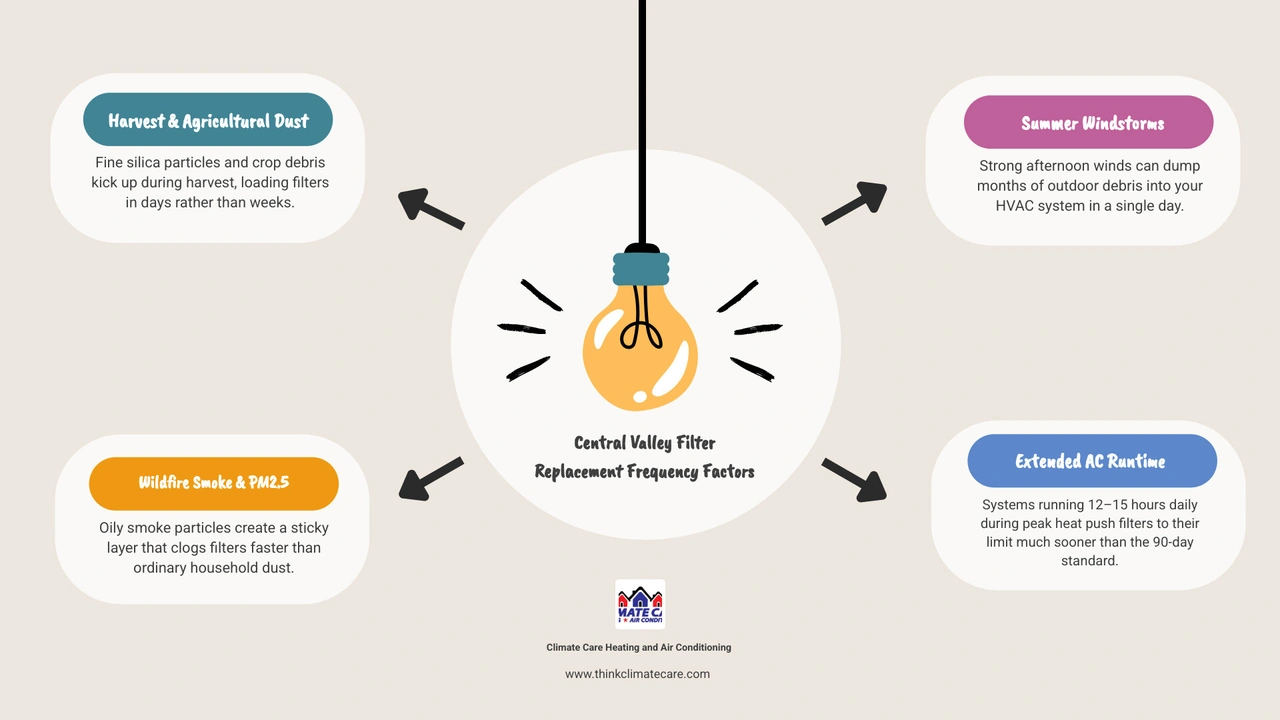
The Central Valley throws a lot at your air filter. Harvest season kicks up agricultural dust and fine silica particles. Summer windstorms can dump months of debris into your system in a single afternoon. Wildfire smoke adds a sticky, oily layer that clogs filters faster than ordinary dust. And with AC systems running 12 to 15 hours a day during peak summer heat, filters hit their limit much sooner than manufacturers expect.
When a filter gets overloaded, your HVAC system works harder, your energy bills climb, and your indoor air quality drops — sometimes dramatically. Knowing the right replacement schedule for your specific situation is the fastest way to protect your system and your family's comfort.
Here is a quick-reference guide to filter replacement frequency in dusty Central Valley conditions:
• Standard home, no pets, no allergies — Recommended Check Interval: Every 30 days — Typical Replacement Interval: Every 60 days
• Home with one pet or mild allergies — Recommended Check Interval: Every 30 days — Typical Replacement Interval: Every 30-45 days
• Multiple shedding pets or allergy sufferers — Recommended Check Interval: Every 20 days — Typical Replacement Interval: Every 20-30 days
• Near unpaved roads or active construction — Recommended Check Interval: Every 2 weeks — Typical Replacement Interval: Every 30 days or sooner
• During harvest season or wildfire smoke events — Recommended Check Interval: Every 2 weeks — Typical Replacement Interval: Replace immediately if gray
• 4-5 inch media filter in dusty conditions — Recommended Check Interval: Every 30 days — Typical Replacement Interval: Every 3-6 months
• 1-inch filter in dusty conditions — Recommended Check Interval: Every 15 days — Typical Replacement Interval: Every 30 days
The rest of this guide walks through exactly why the Central Valley demands a different approach, which filter types hold up best, and what warning signs to watch for so you never get caught with a clogged system in the middle of a heat wave.
Why Filter Replacement Frequency in Dusty Climates Matters for Central Valley Homes
When we think about home maintenance, changing the air filter can feel like a minor chore. However, in our region, neglecting this task can lead to serious mechanical and financial consequences. An air filter’s primary job is to protect your heating and cooling equipment from dust buildup. When the filter becomes choked with dirt, the entire system pays the price.
A clogged filter restricts air movement, which dramatically increases the static pressure within your ductwork. This forces your blower motor to work significantly harder, leading to higher electricity usage and accelerated wear and tear. According to the Department of Energy, a clogged filter can cause up to a 20% loss in HVAC efficiency, which can easily translate to hundreds of dollars in wasted electricity in a single summer.
When airflow is severely restricted, the cooling system can no longer release heat effectively. This often leads to evaporator coil freezing. When the coil freezes, your system can short-cycle, blow warm air, or suffer a complete compressor failure.
Additionally, a heavily loaded filter can trigger the "blow-by effect." This occurs when the suction from the blower motor becomes so strong that it pulls dirty air and dust around the weak edges of the filter frame. This bypasses the filter entirely, depositing abrasive dust directly onto your expensive indoor coils and blower motor. To understand more about how these issues develop, read about the Impact of Dirty Filters on AC Performance and learn What Happens When You Don't Change Your HVAC Air Filters to keep your home running smoothly.
Environmental Factors That Accelerate Filter Replacement Frequency in Dusty Climates
Living in areas like Modesto, Stockton, or Tracy means our HVAC systems operate in a unique microclimate. The Central Valley is an agricultural powerhouse, but tilling fields and harvesting crops (especially during almond harvest season) releases massive amounts of heavy, sticky agricultural dust into the air. Unlike light household dust, agricultural dust quickly mats across filter pleats, sealing off airflow.
Furthermore, dry summer windstorms can carry topsoil and abrasive silica particles for miles, loading a clean filter in a matter of days. We also have to contend with wildfire smoke. Smoke particles are microscopic (often PM2.5) and highly oily. They create a sticky glaze over filter fibers that blocks air passage almost instantly. Understanding these regional challenges is key to protecting your home; you can read more details on How Central Valley Climate Affects Your HVAC System and dive deeper into How Central Valley Dust and Heat Affect Your HVAC.
How Filter Thickness and MERV Ratings Impact Longevity
Not all air filters are created equal. The thickness of your filter and its Minimum Efficiency Reporting Value (MERV) rating play a huge role in how long it will last before needing a replacement.
• 1-Inch Filters: These are the most common filters found in residential homes. Because they have a small surface area, they load up incredibly fast. In high-dust environments, a standard 1-inch pleated filter can become fully loaded in as little as 30 days.
• 4-to-5-Inch Media Filters: These thick, pleated filters have up to six times the surface area of a standard 1-inch filter. They are designed to hold a massive volume of dust and typically last 3 to 6 months in dusty climates, though they still require monthly visual checks.
• MERV Ratings: MERV ratings range from 1 to 20. For residential homes in dusty regions, MERV 8 to 11 represents the sweet spot. They capture pet dander, pollen, and dust without putting excessive strain on your system.
• The Danger of High-MERV and HEPA Filters: While a MERV 13 or true HEPA filter captures incredibly small particles, they also clog much faster in high-dust areas. If left too long, they act like a solid brick in your return duct, causing severe static pressure issues that can burn out your blower motor or freeze your coils.
• Fiberglass (1-inch) — MERV Rating: MERV 1–4 — Standard Climate Lifespan: 30 Days — Dusty Climate Lifespan: 15–20 Days — Best Use Case: Not recommended for dusty regions
• Pleated Paper (1-inch) — MERV Rating: MERV 8–11 — Standard Climate Lifespan: 90 Days — Dusty Climate Lifespan: 30 Days — Best Use Case: Standard homes with regular checks
• High-Efficiency Pleated (1-inch) — MERV Rating: MERV 13 — Standard Climate Lifespan: 90 Days — Dusty Climate Lifespan: 20–30 Days — Best Use Case: Homes with severe allergy sufferers
• Deep Pleated Media (4–5 inch) — MERV Rating: MERV 10–11 — Standard Climate Lifespan: 6–9 Months — Dusty Climate Lifespan: 3–6 Months — Best Use Case: Best overall balance of filtration & life
Signs Your Air Filter is Clogged and Needs Immediate Attention
You don't always have to wait for the calendar to tell you when it's time for a change. Your home and your HVAC system will drop clear hints when the filter is full:
1. The Light Test: This is the easiest and most reliable test. Turn off your system, slide the filter out, and hold it up to a bright light or the sun. If you cannot see light passing through the fibers, the filter is fully loaded and needs immediate replacement.
2. Weak Airflow: If the air coming out of your register vents feels weak or cooler/warmer than usual, a clogged filter is often the primary bottleneck.
3. Uneven Cooling: If you notice that rooms furthest from your indoor unit are warmer than the rest of the house, restricted airflow from a dirty filter is likely to blame.
4. Rapid Dust Accumulation: If you find yourself dusting your coffee tables and furniture only to see a fresh layer of silt return the next day, your filter has hit its capacity and is recirculating dust.
5. Musty Odors: A filter loaded with organic dust and moisture can emit a stale, musty smell whenever the system cycles on.
How to Maintain Your HVAC System in Arid and Windy Regions
Living in an arid, windy region means taking a proactive approach to your home's indoor air quality and system health. Standard, passive maintenance routines simply won't cut it when the air outside is thick with dust. To keep your system running efficiently, it helps to check out our comprehensive How Often Should You Change Your HVAC Air Filter guide and our localized Air Filter Replacement Sacramento Guide.
Customizing Your Filter Replacement Frequency in Dusty Climates by Household Type
Every home is different, and your filter replacement schedule should reflect your daily life.
If you have multiple shedding pets, their fur and dander combine with incoming valley dust to create a thick blanket over your filter. In these homes, we recommend checking your filter every 20 days and replacing it monthly.
For households with allergy sufferers or individuals with respiratory conditions, letting a filter saturate can lead to a 70% increase in common respiratory issues and allergic attacks as allergens bypass the system. Keeping a fresh filter in place can cut allergy and cold symptoms by as much as 70%.
If your home is located near active construction zones in growing areas like Lathrop or Mountain House, or if you live near unpaved agricultural roads, fine concrete dust and silica can clog a standard filter in as little as two weeks. Check your filters bi-weekly during these active periods.
Proactive Steps to Reduce Dust Load and Protect Your System
You can dramatically extend the life of your air filters and protect your HVAC system by taking a few simple, preventive steps:
• Seal Your Ductwork: Leaky return ducts in your attic or crawlspace can suck in massive amounts of dust, dirt, and insulation particles, bypassing your filter entirely. Professional duct sealing keeps this dirty air out of your system.
• Use High-Quality Entry Mats: Placing heavy-duty mats at every entrance and encouraging a "shoes-off" policy stops outdoor dust from ever entering your living spaces.
• Vacuum Regularly with HEPA Filters: Vacuuming carpeted areas at least twice a week with a HEPA-filter vacuum prevents settled dust from being kicked back into the air where your HVAC return registers will pull it in.
• Use the "Recirculate" or "Fan Only" Mode: During high-dust events like a nearby harvest or a summer windstorm, run your system's fan continuously to scrub the air. Homeowners sometimes call this "burping the house"—using a fresh, clean filter to continuously clean the indoor air while keeping the windows firmly shut against the valley heat.
• Keep a Stockpile: Always keep a six-month supply of filters in a clean, dry closet so you can make a quick swap the moment you notice a dust storm or wildfire smoke event.
At Climate Care Heating and Air Conditioning, we specialize in providing holistic, energy-efficient HVAC care tailored specifically to our Central Valley communities. Whether you need professional duct sealing, an indoor air quality assessment, or a comprehensive seasonal tune-up, we are here to help.
Breathe easier and protect your home investment. To schedule your professional system checkup or to learn about our priority maintenance plans, visit our Climate Care HVAC Maintenance Service page today!