What Is the Best HVAC Setup for Central Valley Weather?
The best HVAC setup for central valley weather combines a high-efficiency, variable-speed heat pump (or dual fuel hybrid system) with properly sealed ductwork and strong filtration — giving you reliable cooling through triple-digit summers and dependable heating through cool, foggy winters in cities like Manteca, Modesto, Stockton, and Sacramento.
Quick Answer: Top HVAC Setups for Central Valley Homes
• Variable-speed heat pump — Best For: Most homes with existing ducts — Key Strength: All-in-one efficiency, low operating cost
• Dual fuel hybrid system — Best For: Homes wanting backup gas heat — Key Strength: Best of both worlds: efficiency + power
• Ductless mini-split — Best For: Additions, older homes, hot rooms — Key Strength: No duct losses, zoned comfort
• Central AC + gas furnace — Best For: Homes with newer gas infrastructure — Key Strength: Familiar, reliable, widely serviced
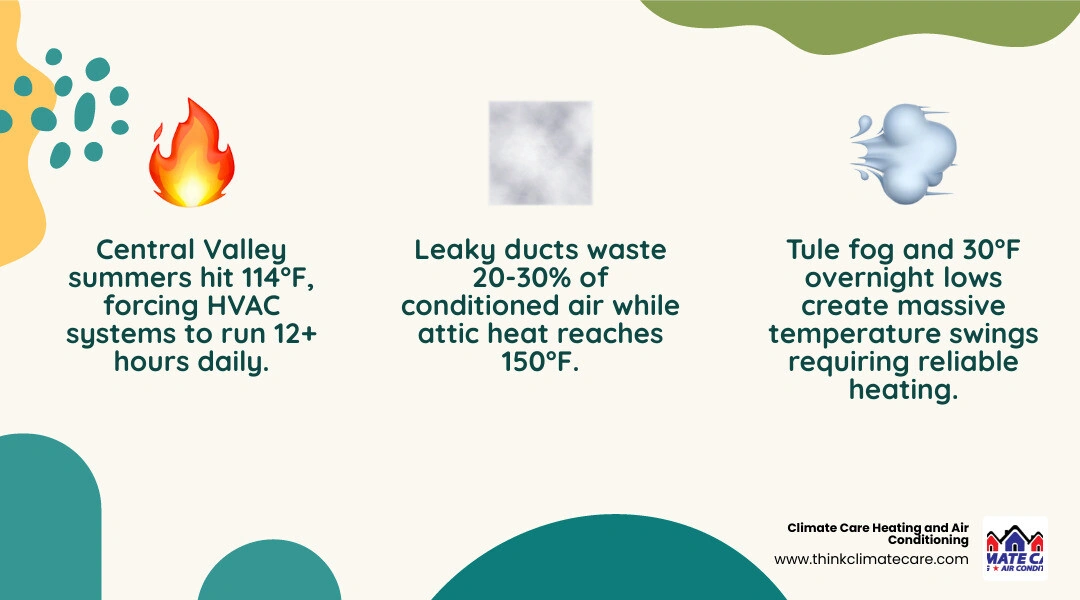
Living in the Central Valley means your HVAC system works harder than almost anywhere else in the country. Summers push well past 100°F — Bakersfield and Fresno hit 114°F in July 2024 — and your system may run 12 or more hours a day just to keep up. Then winter arrives with Tule fog and overnight temperatures dropping into the 30s. Add in agricultural dust, wildfire smoke, and the occasional humidity surge from the Delta Breeze, and you have one of the most demanding HVAC environments in the U.S.
Standard systems built for milder climates simply aren't designed for this. Most conventional AC units are engineered to handle only a 20°F difference between indoor and outdoor temperatures — which means a 114°F day can push even a newer system to its absolute limit. On top of that, the average Central Valley home loses 20–30% of conditioned air through leaky ducts, with attic temperatures reaching 150°F when it's 110°F outside. Every inefficiency gets magnified.
That's why getting your HVAC setup right matters so much here — not just for comfort, but for your energy bills and your system's long-term health.
Designing the Best HVAC Setup for Central Valley Weather
When designing the best hvac setup for central valley weather, we must account for the unique demands of Climate Zone 11. Unlike coastal California, our region experiences dramatic 20-to-30-degree daily temperature swings. A blistering 105°F afternoon in Tracy or Lodi can drop to a cool 65°F by morning, thanks to the Delta Breeze.
These rapid shifts mean your system needs to be highly adaptable. A system that only operates at 100% capacity (single-stage) will constantly turn on and off during milder mornings, wasting energy and wearing out components. To understand how these regional patterns force your system to work overtime, read our guide on How Central Valley Climate Affects Your HVAC System.
Why the Best HVAC Setup for Central Valley Weather Demands High Efficiency
In our extreme climate, standard efficiency units often struggle to keep utility bills manageable. That is why we recommend systems with a minimum of 16 to 17 SEER2 (Seasonal Energy Efficiency Ratio 2) for cooling, and high HSPF2 (Heating Seasonal Performance Factor 2) ratings for winter heating.
Upgrading to a high-efficiency system is one of the smartest investments you can make. You can compare the differences in long-term savings and upfront value in our Standard Efficiency vs High Efficiency HVAC Comparison.
The secret to this efficiency lies in variable-speed technology and inverter-driven compressors. Unlike traditional single-stage compressors that run at either "full blast" or "off," inverter compressors adjust their speed in tiny increments. They run continuously at lower, energy-saving speeds to maintain a perfectly steady indoor temperature. For a deeper dive into how this technology keeps your bills low, explore our resources on Energy Efficient HVAC and HVAC System Efficiency.
Heat Pumps vs. Dual Fuel: Finding the Best HVAC Setup for Central Valley Weather
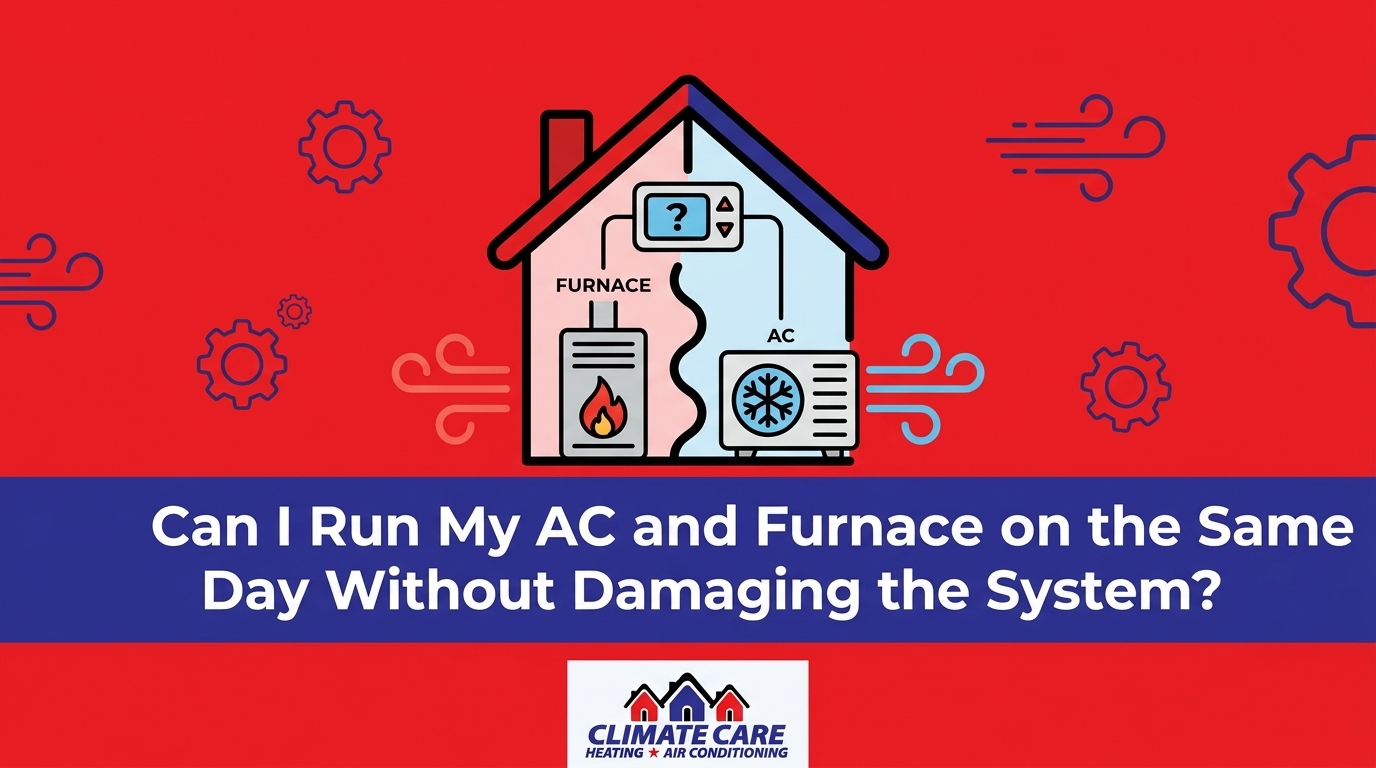
For many years, the standard setup in Elk Grove and Ripon was a split system: a central air conditioner paired with a gas furnace. However, in June 2026, modern all-electric heat pumps and dual fuel hybrid systems have become the gold standard.
To help you decide which configuration fits your home, we have put together this direct comparison:
• Cooling Source — All-Electric Heat Pump: Electric (Inverter Compressor) — Dual Fuel Hybrid System: Electric (Inverter Compressor) — Traditional Split System: Electric (Standard Compressor)
• Primary Heating — All-Electric Heat Pump: Electric Heat Transfer — Dual Fuel Hybrid System: Electric Heat Pump — Traditional Split System: Natural Gas / Propane Furnace
• Backup Heating — All-Electric Heat Pump: Electric Heat Strips — Dual Fuel Hybrid System: Gas Furnace — Traditional Split System: None (Gas is the sole source)
• Solar Compatibility — All-Electric Heat Pump: Excellent (100% Electric) — Dual Fuel Hybrid System: Great (Reduces summer electric load) — Traditional Split System: Moderate
• Best Suited For — All-Electric Heat Pump: Homes with solar panels or no gas lines — Dual Fuel Hybrid System: Homes in cold microclimates — Traditional Split System: Budget-focused replacements
Because heat pumps move heat rather than creating it, they can deliver up to three units of heat for every single unit of electricity consumed. Many homeowners ask: Are Heat Pumps Efficient in Hot Dry Climates? Yes, modern inverter heat pumps maintain full cooling capacity even when outdoor temperatures soar past 115°F. To see how these systems can lower your carbon footprint and integrate perfectly with residential solar arrays, check out the Heat Pump Benefits for Central Valley Homeowners.
If you prefer the powerful, rapid heating of a gas furnace during the coldest December nights, a dual fuel hybrid system is an outstanding choice. It automatically switches between the electric heat pump and the gas furnace based on outdoor temperatures to keep your heating as cost-effective as possible.
Ductless Mini-Splits vs. Central Air: Flexible Cooling Solutions for Sacramento Homes
If you live in an older home in Sacramento, Folsom, or Orangevale, you might lack the space for traditional ductwork. Or perhaps you have a home addition, a converted garage, or a stubborn upstairs bedroom that never seems to stay cool.
Ductless mini-split systems offer an incredibly flexible, high-efficiency alternative to central air. By installing individual air handlers in specific rooms, you gain precise zoning control. You only cool or heat the rooms you are actively using, which prevents energy waste and delivers localized comfort. Our team specializes in designing zoned mini-split layouts that blend seamlessly into your home's decor while providing whisper-quiet, energy-saving performance.
Sizing, Ductwork, and Airflow Optimization
Even the most advanced, high-efficiency HVAC system will underperform if it is paired with leaky ducts or is improperly sized. In the Central Valley, attic temperatures regularly climb to 150°F. If your ductwork has cracks or loose connections, your system will suck in dusty, superheated attic air, forcing the compressor to work twice as hard.
Before installing any new system, we perform a comprehensive Manual J load calculation. This industry-standard calculation evaluates your home’s square footage, insulation levels, window orientation, and local climate data to determine the exact system size you need. To learn why guessing system size by square footage alone is a major mistake, read our guide on Getting the Right Size HVAC for the Central Valley Homes.
Proper sizing prevents "short-cycling"—a problem where an oversized system turns on and off too rapidly, leading to uneven temperatures, high humidity, and early compressor failure. You can learn more about this critical process by reading Mastering the Art of HVAC Sizing and Selection and checking if your Is New HVAC System Properly Sized for Your Home.
Combating Dust, Tule Fog, and Wildfire Smoke in Modesto and Stockton
Our environment poses unique challenges to indoor air quality and system longevity. In agricultural hubs like Modesto, Stockton, and Patterson, heavy dust and crop debris can quickly coat outdoor condenser coils, insulating them and causing the system to overheat. To protect your investment, read about How Central Valley Dust and Heat Affect Your HVAC.
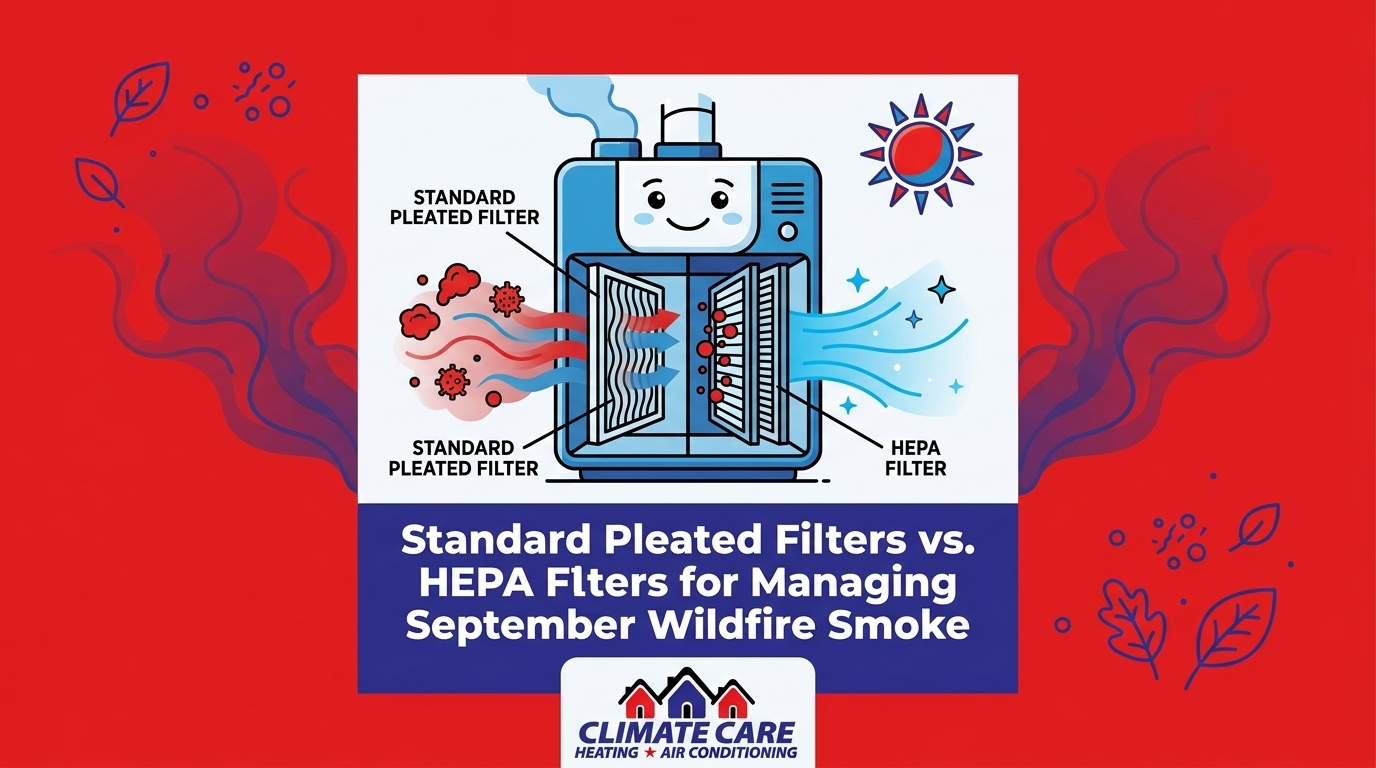
To keep your indoor air clean during wildfire season, we highly recommend upgrading to MERV-13 air filters or whole-home air purification systems. These systems capture microscopic smoke particles, pollen, and dust before they circulate through your living spaces.
Additionally, our winters bring thick Tule fog. This dense, freezing moisture can settle on outdoor heat pump coils, causing frost to build up. Modern heat pumps feature automatic defrost cycles to melt this ice, but these cycles put extra wear on the system’s reversing valve. Regular preventative maintenance ensures your system transitions smoothly between heating and cooling modes without breaking down when you need it most.
Navigating the 2026 Refrigerant Transition and Efficiency Standards
As of June 2026, the HVAC industry has fully transitioned away from R-410A refrigerant in compliance with EPA regulations aimed at reducing environmental impact. New residential systems now utilize eco-friendly, low-GWP (Global Warming Potential) refrigerants like R-454B and R-32.
If you are deciding whether to repair an aging, pre-2025 system or replace it entirely, this transition is a major factor. While we continue to service and repair older R-410A systems, the cost of reclaimed refrigerant will naturally rise over time as supply decreases. Investing in a modern, future-proofed system now ensures you won't face inflated repair costs down the road, while also meeting California’s strict Title 24 building energy efficiency standards.
Conclusion: Trust Climate Care for Your Central Valley Comfort
Finding the best hvac setup for central valley weather doesn't have to be overwhelming. Whether you need a high-efficiency heat pump installation in Manteca, a dual fuel hybrid system upgrade in Modesto, targeted ductless mini-splits in Sacramento, or urgent AC repair in Stockton, we are here to help.
At Climate Care Heating and Air Conditioning, we take a holistic approach to your home's comfort, focusing on peak system performance, long-term energy savings, and clean indoor air. To keep your system running efficiently year-round and avoid unexpected summer breakdowns, ask us about our comprehensive membership plan, which offers priority service, regular tune-ups, and exclusive savings.
Ready to upgrade your home comfort? Explore our Climate Care HVAC Services and schedule a consultation with our local experts today!